Best OLED gaming screens in 2026: comparison and complete buying guide

OLED gaming screen gaming monitor 2026 OLED screens comparison

We tested, compared, and sorted the best OLED monitors for gaming in 2026. From the QD-OLED at 419 bucks to the 4K 240Hz monster, here is our selection.

OLED gaming in 2026: here we are (finally)

419 euros. That's the price of a 27-inch 240Hz QD-OLED monitor in May 2026. Two years ago, we paid twice as much for a 165Hz VA panel with ghosting. Times are changing.

The OLED gaming screen market has completely exploded this year. Between Samsung breaking prices on 4K, ASUS pushing the refresh rate to 480Hz and Alienware making QD-OLED accessible, we are spoiled for choice. But precisely - too much choice kills choice.

We peeled the specs, compared the panels, looked at the prices at LDLC, Amazon, and TopAchat to give you a real guide. Not a generic thing with 15 screens listed without opinions. Four monitors, four different profiles, and a clear verdict for each.

Before getting to the heart of the matter: if you are still hesitating between IPS, VA, and OLED, go read our panel types guide first. Here, we assume that you want OLED — and we will help you choose which one.

Choose your delivery country to see prices based on your location

Filters

LG UltraGear 27GR93U-B 27in 4K 144Hz

LG UltraGear 27GR93U-B 27in 4K 144Hz

447€

(6 Vendors)
Resolution: 4K (2160p)
Top brand Excellent quality Good frequency Standard size
Samsung Odyssey G7 27" 144Hz Black

Samsung Odyssey G7 27" 144Hz Black

310€

(11 Vendors)
Brand: Samsung
Top brand Excellent quality Good frequency Standard size
ASUS ROG Strix XG27AQDMGR 26.5" WQHD OLED 240Hz

ASUS ROG Strix XG27AQDMGR 26.5" WQHD OLED 240Hz

439€

(10 Vendors)
Brand: Asus
Top brand Incredible quality Extreme frequency Standard size
AOC Q27G41ZDF 27" QHD OLED 240Hz

AOC Q27G41ZDF 27" QHD OLED 240Hz

359€

(11 Vendors)
Brand: AOC
Good brand Incredible quality Extreme frequency Standard size
AOC Q27G42ZE 27" QHD 240Hz Black

AOC Q27G42ZE 27" QHD 240Hz Black

169€

(13 Vendors)
5 (1)
Brand: AOC
Good brand Excellent quality Extreme frequency Standard size
Gigabyte GO27Q24 27" QHD 240Hz

Gigabyte GO27Q24 27" QHD 240Hz

357€

(5 Vendors)
Brand: Gigabyte
Good brand Incredible quality Extreme frequency Standard size
ASUS ROG Strix XG27AQDMG Black 27 WQHD OLED

ASUS ROG Strix XG27AQDMG Black 27 WQHD OLED

399€

(11 Vendors)
Brand: Asus
Top brand Incredible quality Extreme frequency Standard size
TCL 25G64 24.5in FHD 300Hz HDR600 Black

TCL 25G64 24.5in FHD 300Hz HDR600 Black

177€

(4 Vendors)
Refresh Rate: 300
Good brand Excellent quality Extreme frequency Standard size
Gigabyte AORUS FO32U2 31.5in OLED 4K 240Hz Black

Gigabyte AORUS FO32U2 31.5in OLED 4K 240Hz Black

599€

(7 Vendors)
Brand: Gigabyte
Good brand Incredible quality Extreme frequency Small size Overkill Powerful GPU
MSI MAG 271QP QD-OLED X24 26.5in WQHD 240Hz Black

MSI MAG 271QP QD-OLED X24 26.5in WQHD 240Hz Black

456€

(4 Vendors)
Display Type: QD-OLED
Good brand Incredible quality Extreme frequency Standard size
AOC Q27G42XE 27" QHD 180Hz Black/Red

AOC Q27G42XE 27" QHD 180Hz Black/Red

139€

(10 Vendors)
Brand: AOC
Good brand Excellent quality Good frequency Standard size
LG 38BR85QC-W 37.5" Curved 3840x1600 144Hz USB-C

LG 38BR85QC-W 37.5" Curved 3840x1600 144Hz USB-C

959€

(2 Vendors)
Brand: LG
Top brand Excellent quality Good frequency Ultra large
MSI MAG 273QP QD-OLED X24 26.5 inch WQHD 240Hz

MSI MAG 273QP QD-OLED X24 26.5 inch WQHD 240Hz

449€

(2 Vendors)
Brand: MSI
Good brand Incredible quality Extreme frequency Small size
IIYAMA G-Master Black Hawk 27" QHD 144Hz

IIYAMA G-Master Black Hawk 27" QHD 144Hz

138€

(10 Vendors)
Brand: iiyama
Good brand Excellent quality Good frequency Standard size
GEESUU MG270L2Q 27" QHD 200Hz IPS Black

GEESUU MG270L2Q 27" QHD 200Hz IPS Black

140€

(3 Vendors)
Refresh Rate: 200
Top brand Excellent quality Extreme frequency Standard size
AOC U27G4R 27 FHD 144Hz Black

AOC U27G4R 27 FHD 144Hz Black

263€

(10 Vendors)
Brand: AOC
Good brand Excellent quality Good frequency Standard size
Gigabyte M27Q2 QD 27in QHD 200Hz

Gigabyte M27Q2 QD 27in QHD 200Hz

225€

(3 Vendors)
Brand: Gigabyte
Good brand Excellent quality Extreme frequency Standard size
ASUS ROG Strix XG32UCWMG 31.5in 4K OLED 240Hz

ASUS ROG Strix XG32UCWMG 31.5in 4K OLED 240Hz

873€

(12 Vendors)
Brand: Asus
Top brand Incredible quality Extreme frequency Small size Overkill Powerful GPU
Gigabyte GS27U Black 27-inch UHD 160Hz HDR400

Gigabyte GS27U Black 27-inch UHD 160Hz HDR400

198€

(7 Vendors)
Brand: Gigabyte
Good brand Excellent quality Good frequency Standard size
Samsung Odyssey G8 32in 4K/240Hz Black

Samsung Odyssey G8 32in 4K/240Hz Black

739€

(14 Vendors)
Brand: Samsung
Top brand Incredible quality Extreme frequency Ultra large Powerful GPU
ASUS ROG Swift OLED PG32UCDMZ 31.5in 4K 240Hz Black

ASUS ROG Swift OLED PG32UCDMZ 31.5in 4K 240Hz Black

849€

(6 Vendors)
Display Type: QD-OLED
Top brand Incredible quality Extreme frequency Ultra large Powerful GPU
Philips Evnia 27M2N6501L 26.5" WQHD 240Hz

Philips Evnia 27M2N6501L 26.5" WQHD 240Hz

399€

(8 Vendors)
Brand: Philips
Good brand Incredible quality Extreme frequency Standard size
MSI Optix G32CQ4 E2 Black 31.5-inch WQHD 170Hz

MSI Optix G32CQ4 E2 Black 31.5-inch WQHD 170Hz

174€

(6 Vendors)
Brand: MSI
Good brand Good for immersion Good frequency Ultra large
Dell Alienware AW2725Q 27" 4K OLED 240Hz Black

Dell Alienware AW2725Q 27" 4K OLED 240Hz Black

654€

(11 Vendors)
Brand: DELL
Top brand Quality Warning Extreme frequency Standard size Powerful GPU
Samsung Odyssey G50F LS27FG502EUXEN 27" QHD 180Hz

Samsung Odyssey G50F LS27FG502EUXEN 27" QHD 180Hz

159€

(10 Vendors)
Brand: Samsung
Top brand Excellent quality Good frequency Standard size

Our selection: 4 OLED screens, 4 profiles

We're not going to drown you in 12 references. Here are the four monitors that we really recommend in 2026, each for a specific use. From the best value for money to the uncompromising monster.

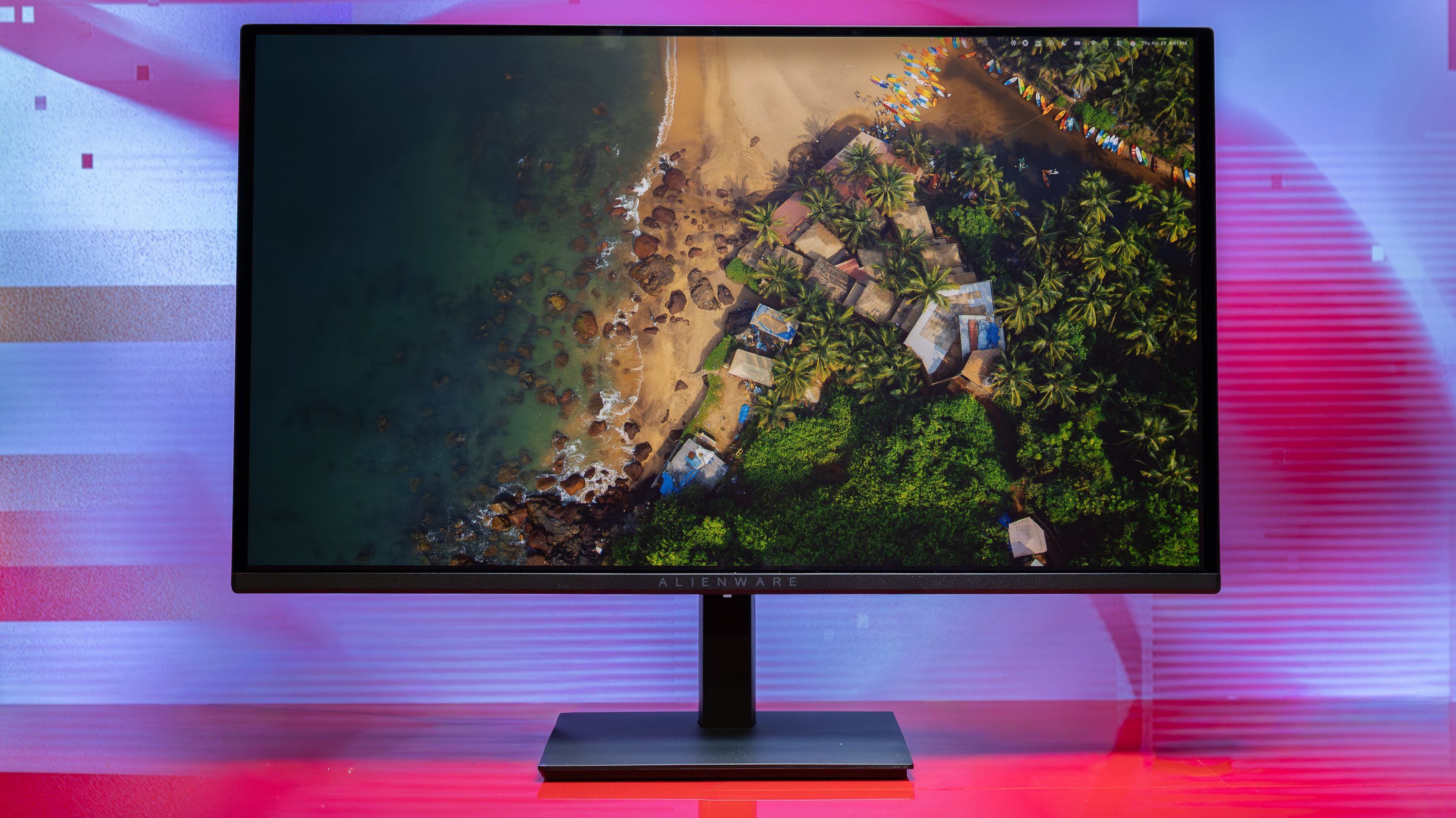
Alienware AW2726DM: the QD-OLED that everyone can afford

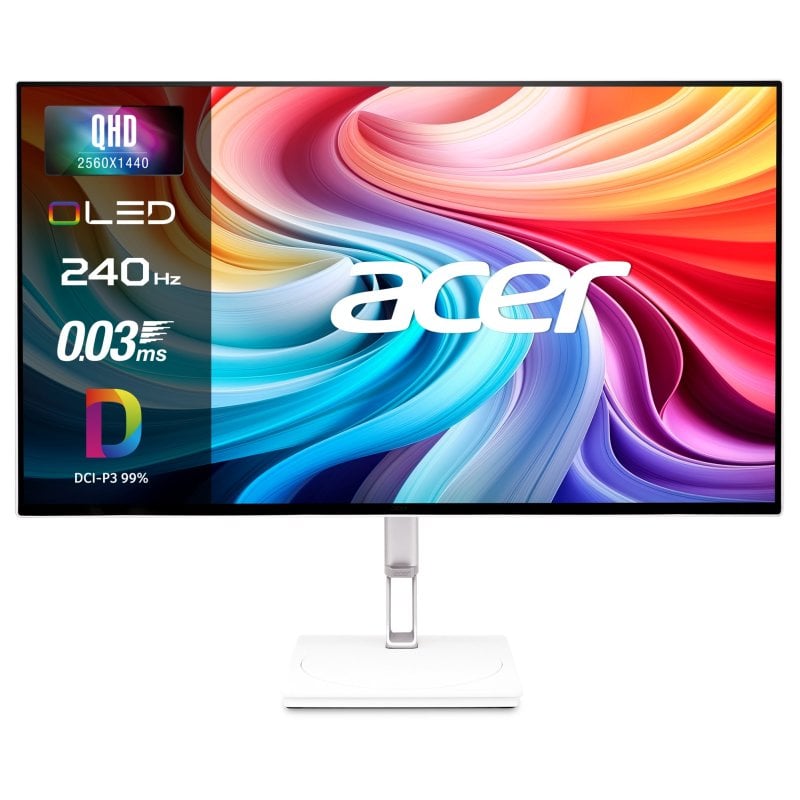
We start with the one that turned the market around. When Dell announced a 27-inch QD-OLED at 419 euros , everyone thought it was a trap. Cheap slab, ridiculous brightness, cheap finishes? Not at all.

The AW2726DM features a true QD-OLED panel from Samsung Display at 2560x1440 with 240Hz. The response time is 0.03 ms - practically instantaneous. The colors are beautiful, the contrast is infinite (that's the OLED principle), and the blacks are... black. Not dark gray like on your old VA.

The weak point? The brightness. We are around 200 cd/m² in SDR and 400 cd/m² in HDR peak . It's fine to play in a normal room, but if you have a south-facing bay window behind you, it's not ideal. And there's no USB hub — you'll have to plug your keyboard in elsewhere.

But well. At 419 euros for QD-OLED 240Hz with 3 years anti-burn-in warranty , it's difficult to complain. It's the monitor that made OLED gaming accessible to the common people. And for 90% of players, it's more than enough.

Compatible FreeSync Premium Pro and G-Sync. Two HDMI 2.1 ports and one DisplayPort 1.4. Nothing crazy in terms of connectivity, but the essentials are there.

Alienware AW2726DM 27" QHD QD-OLED 240Hz

Alienware AW2726DM 27" QHD QD-OLED 240Hz

the affordable QD-OLED that changed everything

Image Quality
Value for money
Gaming reactivity
Ergonomics and connectivity

Pros

  • • Unbeatable price for QD-OLED (419 euros)
  • • 240Hz with 0.03 ms response time
  • • Colors and contrast on par with models twice as expensive.
  • • 3-year warranty against burn-in

Cons

  • • Limited HDR brightness (400 nits peak)
  • • No integrated USB hub
  • • Basic foot ergonomics

ASUS ROG Swift PG27AQDP: 480Hz for competitive gamers

480Hz on an OLED panel. You have to say it out loud to realize how absurd it is. ASUS pushed the cursor to the maximum with the PG27AQDP, and the result is impressive — if you have the eyes (and the GPU) to enjoy it.

We are on the WOLED 26.5-inch QHD , not QD-OLED like the Alienware. The difference? The colors are slightly less saturated out of the box, but the brightness is much better: 1300 nits peak HDR It's three times more than the Alienware. In HDR, the difference is striking.

The real selling point is obviously the 480Hz. On CS2, Valorant, or Overwatch 2, the fluidity is out of this world. Combined with the 0.03ms OLED response time, you have a motion clarity that even the best 360Hz IPS cannot match. Every micro-movement is rendered with surgical precision.

The problem is the price. Expect between 690 and 900 euros according to the promos. It's twice the price of the Alienware. And to fully enjoy it, you need a setup that pushes 400+ FPS in competitive gaming — so an RTX 5080 or equivalent. If you play at 120 FPS on RPGs, this screen is overkill.

However, if you are a serious competitive gamer who wants the best possible advantage, the PG27AQDP is currently the undisputed king of the segment. Nothing comes close to it.

ASUS ROG Swift OLED PG27AQDP 26.5" QHD 480Hz

ASUS ROG Swift OLED PG27AQDP 26.5" QHD 480Hz

The 480Hz monster for competitive gaming without compromise

Image Quality
Gaming reactivity
Brightness and HDR
Quality-price ratio

Pros

  • • 480Hz OLED with 0.03 ms — unparalleled motion clarity
  • • 1300 nits HDR pic — HDR finally convincing on monitor
  • • G-Sync + FreeSync Premium — compatible with all GPUs
  • • Build quality ROG premium

Cons

  • • High price (690-900 euros)
  • • Requires a very powerful GPU to fully utilize the 480Hz.
  • • WOLED slightly less colorful than QD-OLED in SDR.

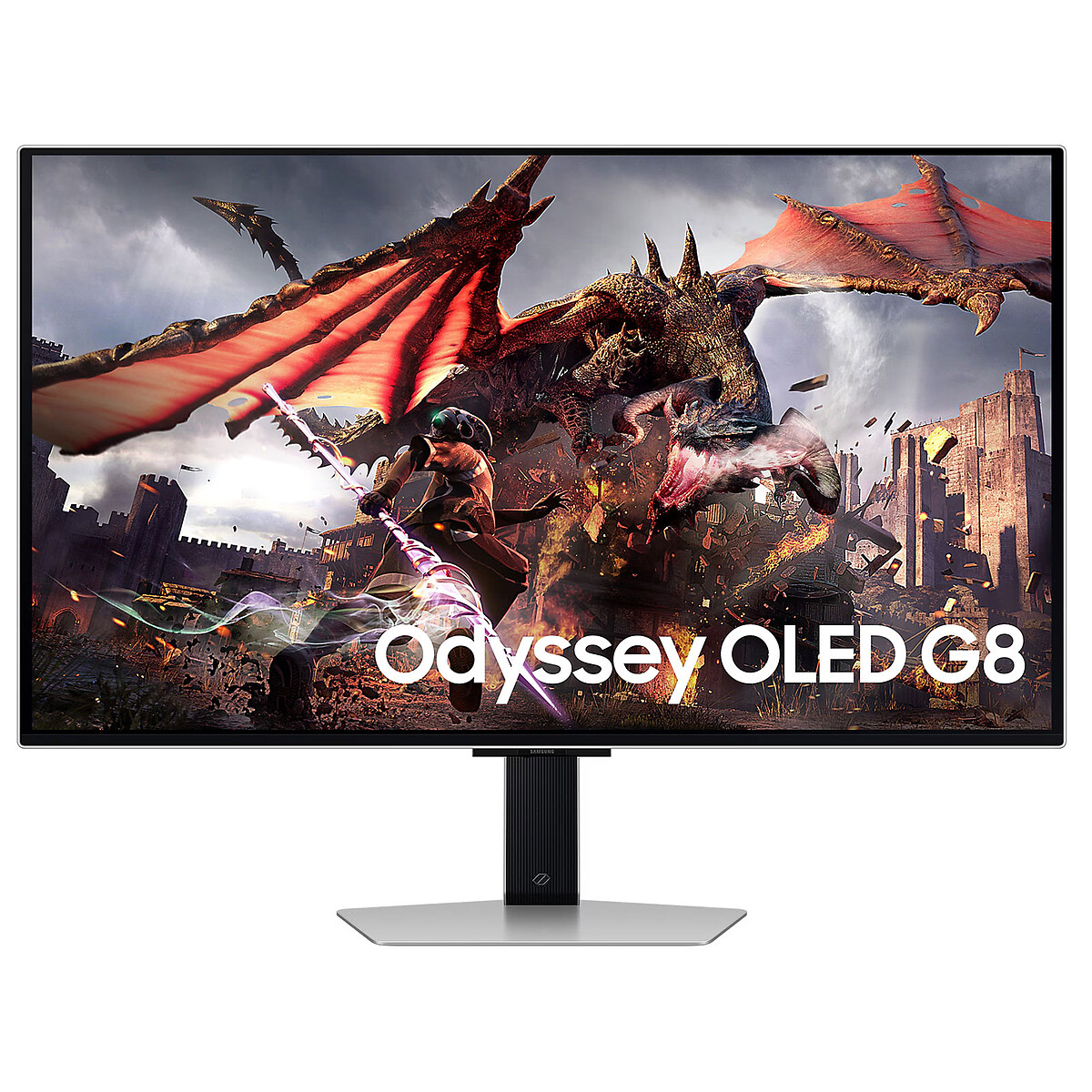
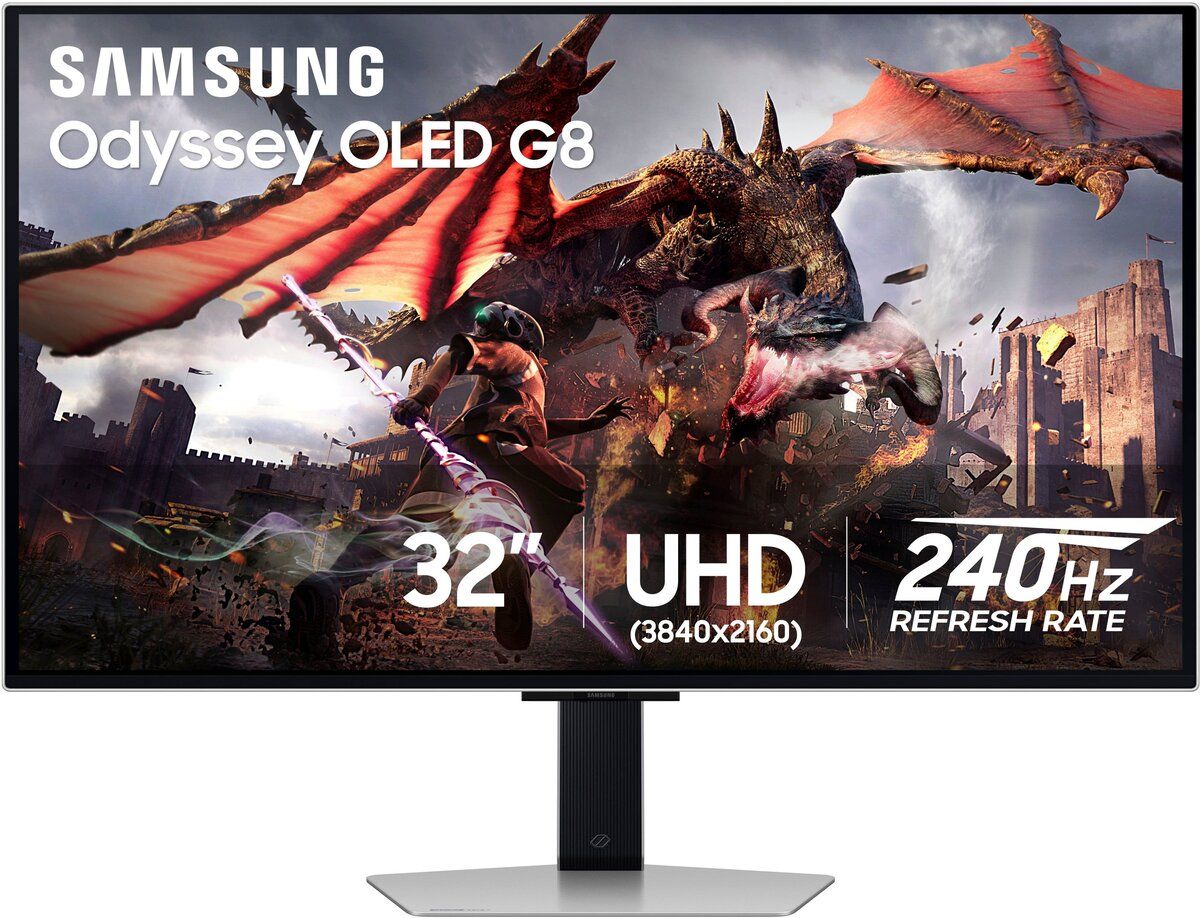
Samsung Odyssey OLED G8 (G80SD): 4K OLED without breaking the bank

Do you want 4K OLED without spending 1500 bucks? Samsung has the answer. The G80SD is a 32-inch 4K 240Hz OLED at around 880 euros . It's almost half less than ASUS's PG32UCDM. And frankly, for most uses, the difference doesn't justify the gap.

The panel is a Samsung OLED (not QD-OLED like on high-end models, be careful). The 3840x2160 resolution on 32 inches gives a formidable pixel density — text is sharp, gaming details are incredible, and in desktop mode it's a real pleasure compared to 1440p.

240Hz in 4K, it means you need a powerful GPU. An RTX 5080 does well in 4K with DLSS, but don't expect 240 FPS native on Crimson Desert or Fable. It's more a screen to enjoy the 4K at 100-144 FPS with headroom for competitive at reduced resolution.

Small bonus that others don't have: the G80SD integrates Tizen OS and the Samsung Gaming Hub You can launch cloud gaming (Xbox, GeForce NOW) directly from the screen, without a PC. Gadget for some, game-changer for others.

The main downside: HDR brightness remains below more expensive ASUS models, and the anti-reflective treatment is average. But at 880 euros for 4K OLED 240Hz, it's the smart pick of this selection.

Samsung Odyssey OLED G8 G80SD 32" 4K 240Hz

Samsung Odyssey OLED G8 G80SD 32" 4K 240Hz

4K OLED at the smartest price

Image Quality
Smart features
Gaming reactivity
Quality-price ratio

Pros

  • • 4K OLED 240Hz at 880 euros — excellent specs/price ratio
  • • Samsung Gaming Hub and Tizen OS integrated
  • • 32 inches ideal for 4K - perfect pixel density
  • • FreeSync Premium Pro + G-Sync compatible

Cons

  • • HDR brightness lower than premium ASUS models
  • • Improvable anti-reflective treatment
  • • No QD-OLED - colors slightly subdued

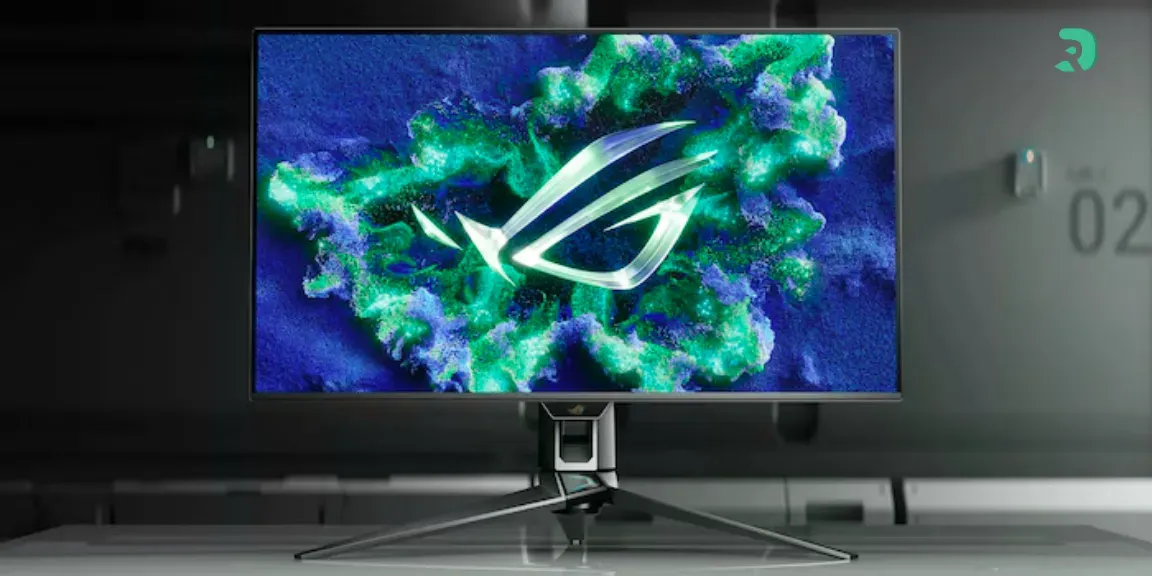
ASUS ROG Swift PG32UCDM: the best gaming screen on the market, period

We're not going to beat around the bush. The PG32UCDM is, according to RTINGS and pretty much all serious testers, the best OLED gaming monitor ever tested If you are looking for the absolute top and budget is not a problem, this is the one.

32 inches, 4K, 240Hz, QD-OLED panel. The colors are stratospheric - we're talking about 99% DCI-P3 with almost perfect accuracy right out of the box. The HDR is sumptuous thanks to a peak brightness significantly higher than Samsung's. And the ROG manufacturing quality is impeccable: solid stand, integrated cable management, premium finishes.

Where it crushes the competition is in the uniformity of the panel and the micro-lens array (MLA) treatment that reduces reflections. In broad daylight, in an office with ambient light, the difference with Samsung is visible. HDR games stand out with a richness of details in the highlights that no other monitor in this selection can reproduce.

The price? Around 1500 euros . Yes, it hurts. It's almost double the price of Samsung for the same diagonal and resolution. But that's the price of perfection — or the closest thing to it in 2026. If you're building a high-end setup with an RTX 5080 or 5090, it would be a shame to limit the experience with a mediocre screen.

Our advice: if you are hesitating between the Samsung and this one, ask yourself about the context. Dark room + mainly gaming? The Samsung is more than enough. Bright room, creative work as a bonus, or simply wanting the best? The PG32UCDM.

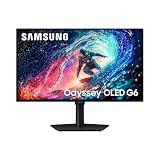
ASUS ROG Swift OLED PG32UCDM 31.5" 4K QD-OLED 240Hz

ASUS ROG Swift OLED PG32UCDM 31.5" 4K QD-OLED 240Hz

Simply the best OLED gaming monitor on the market.

Image quality
HDR and brightness
Quality-price ratio
Gaming responsiveness

Pros

  • • QD-OLED 4K 240Hz — the absolute best in image quality
  • • HDR brightness and top anti-reflective MLA
  • • Panel uniformity and exemplary color accuracy
  • • Build quality premium ROG with cable management

Cons

  • • Price around 1500 euros
  • • Requires an RTX 5080/5090 for 4K 240Hz.
  • • May seem overkill for gaming only
Feature Alienware AW2726DM ASUS PG27AQDP Samsung G80SD ASUS PG32UCDM
Size 26.5" 26.5" 32 inches 31.5"
Resolution 2560x1440 (QHD) 2560x1440 (QHD) 3840x2160 (4K) 3840x2160 (4K)
Panel QD-OLED WOLED OLED QD-OLED
Taux de rafraîchissement 240 Hz 480 Hz 240 Hz 240 Hz
Response time 0.03 ms 0.03 ms 0.03 ms 0.03 ms
Peak HDR brightness ~400 nits ~1300 nits ~1000 nits ~1300 nits
Adaptive Sync FreeSync Premium Pro G-Sync + FreeSync FreeSync Premium Pro G-Sync + FreeSync
Built-in Smart TV No No Yes (Tizen) No
Indicative price ~419 euros ~690-900 euros ~880 euros ~1500 euros
Ideal Profile Best value for money Purely competitive 4K accessible Premium without compromise
Swipe to view more

OLED, QD-OLED, WOLED: untangling the mess

You have seen three types of panels in this comparison and you wonder which one is "the best". Quick summary.

QD-OLED (Quantum Dot OLED) — Manufactured by Samsung Display. The colors are brighter and naturally saturated thanks to quantum dots. This is the technology found on the Alienware and the PG32UCDM. In SDR, the images sparkle without calibration. The historical flaw was brightness, but the latest generations have bridged the gap.
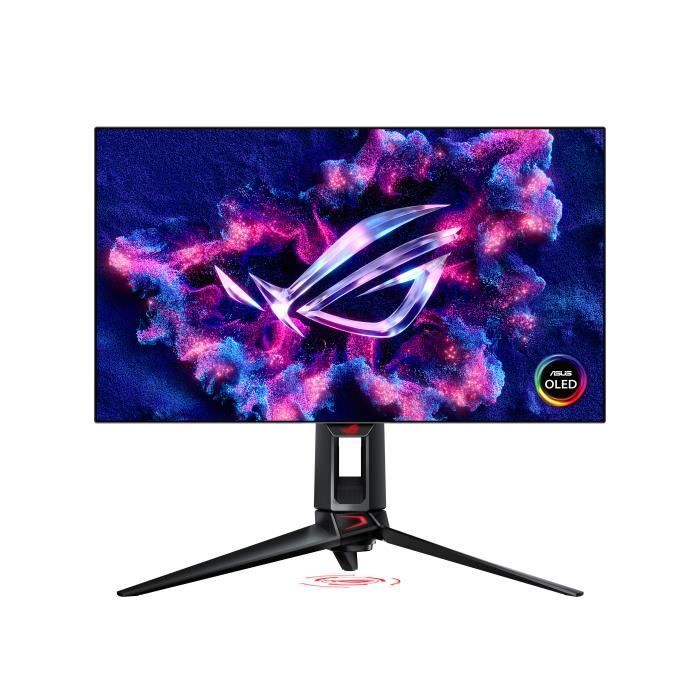
WOLED — It's LG Display behind. The panel of the PG27AQDP. Historically a little less colorful than QD-OLED, but with better HDR brightness. The white sub-pixel allows peaks up to 1300 nits. In 2026, the two technologies are generally equivalent — it's mainly a question of compromise between colors and brightness.

Classic OLED — This is what we have on the Samsung G80SD. Samsung uses its own OLED technology (different from the QD-OLED sold to other manufacturers). Performance is very good but slightly behind QD-OLED in color vibrancy. For the vast majority of users, the difference is invisible to the naked eye.

In short: don't worry too much about the type of panel. The four screens in this selection are all excellent. The real difference lies in size, resolution, refresh rate, and price.

Where are we at with burn-in in 2026?

The question that comes up in every article about OLED screens. "Yes, but what about burn-in?"

In normal gaming use — not a static display 24/7 of the same image — burn-in is no longer a real issue in 2026. All manufacturers have implemented protections: pixel shifting, logo dimming, static content detection, automatic refresh cycles.

Alienware offers 3 years warranty covering burn-in . ASUS also on its ROG models. Samsung is a little more cautious about the exact terms of its warranty, but user feedback after 1-2 years of use is very reassuring.

The only case where I would pay attention: if you use the screen 8h per day for office work with the Windows taskbar always visible in the same place. There, an IPS remains calmer in the very long term. For gaming + mixed use, go ahead without stress.

What GPU to enjoy these screens?

An OLED 240Hz screen is magnificent. An OLED 240Hz screen with a GTX 1660 behind it is a waste. Here is what GPU you need depending on the screen you choose.

For the 27" QHD (Alienware, ASUS PG27AQDP) — An RTX 5070 or RX 9070 XT is more than enough for 1440p at 200+ FPS in competitive gaming. For AAA games on ultra settings, an RTX 5080 provides more headroom. And if you're aiming for the 480Hz of the PG27AQDP in competitive gaming, you clearly need at least a 5080.

For the 32" 4K (Samsung G80SD, ASUS PG32UCDM) — 4K at 240Hz native is the territory of the RTX 5090. But with DLSS 4 and frame generation, an RTX 5080 does very well in practice. The RX 9070 XT can also do the job in 4K with FSR 4, even if the results are a notch below.

Check our comparison of the best graphics cards 2026 to find the GPU that goes with your future screen.

Verdict: which one to choose?

No suspense. Here is our firm opinion:

  • Do you want the best value for money — Alienware AW2726DM. At 419 euros, it's the obvious choice for 90% of gamers. QD-OLED, 240Hz, and that's enough.
  • You play competitively and you want an advantage — ASUS PG27AQDP. 480Hz OLED, nothing can rival. Reserved for serious gamers with the GPU to match.
  • You want 4K without breaking the bank — Samsung Odyssey OLED G8. 880 euros for 4K OLED 240Hz on 32 inches, it's the best 4K deal at the moment.
  • You want the best, period — ASUS PG32UCDM. 1500 euros, but it's the king. If your setup justifies it, you won't regret it.
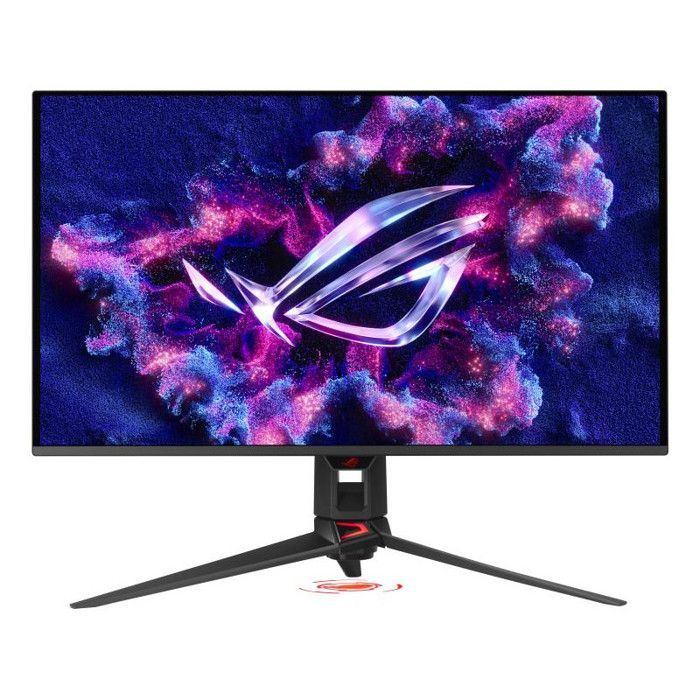
And if you're still hesitating? Take the Alienware. Seriously. At that price, the risk is almost zero, and you discover OLED gaming without mortgaging your setup.

FAQ

Is OLED really worth it compared to a good IPS?

Yes, without hesitation. The infinite contrast, perfect blacks, and almost instantaneous response time completely change the experience. Once you have played on OLED, going back to IPS feels like looking through a gray veil. And with prices dropping in 2026, the price difference with a good IPS 240Hz narrows to 100-150 euros.

27 inches or 32 inches for gaming?

It depends on your distance from the screen and the resolution. For QHD (1440p), 27 inches is perfect — pixel density is optimal at 60-80 cm. For 4K, 32 inches better exploits the resolution without needing scaling. If you play competitively, 27 inches is also preferable because you see the whole screen at once without moving your eyes.

Can I use a gaming OLED screen for work too?

Absolutely. The 4K models (Samsung G80SD, ASUS PG32UCDM) are even excellent for office work and content creation. The color accuracy and text sharpness in 4K on a 32-inch screen is a delight. Just enable pixel shift and anti-burn-in protections if you display static content for a long time.

Should we wait for the next models?

The eternal trap question. There will always be something better in 6 months. But in May 2026, the gaming OLED market is mature, prices are low, and the technology is reliable. If you need a screen now, it's a great time to buy. The next developments (MLA on all models, QD-OLED gen 4) should not arrive before 2027.