GPU drought 2026: why Nvidia and AMD are not releasing anything this year

GPU shortage 2026 RTX 50 Super graphics card shortage

No new gaming GPU in 2026. RTX 50 Super delayed, RDNA 5 in 2027, GDDR7 shortage... Let's take stock of the drought and when things will change.

2026, the year when no one gets out of a graphics card

No new gaming GPU in 2026. We're not going to beat around the bush: it's the first time in almost 30 years that neither Nvidia nor AMD have launched a new generation of graphics card in a full year. Not a refresh, not a new die, nothing. Nada.

The term that has been circulating everywhere for a few weeks is "GPU drought" — GPU drought. And for once, it's not forum drama. The RTX 50 Super cards are delayed until 2027, AMD won't move before RDNA 5 (2027-2028), and Intel... we'll come back to that. As a result: if you don't have your card yet, you'll have to wait — or pay a high price for what already exists.

We take stock of what is happening, why, and above all: what are you doing in the meantime.

RTX 50 Super: the refresh slides towards CES 2027

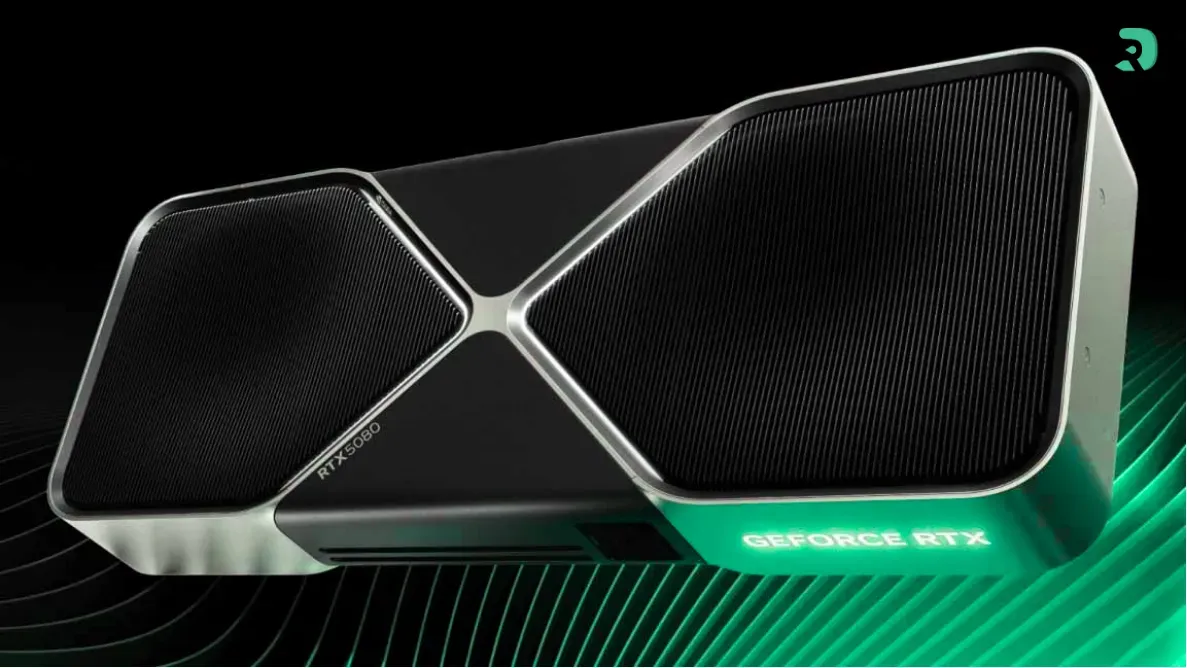
The RTX 50 Super series — RTX 5070 Super, 5080 Super, etc. — was expected for the second half of 2026. It's dead.

Several credible sources, including Igor's Lab and leakers close to the supply chain, are now pointing towards an announcement at the CES 2027 (january 2027) at the earliest. Some even speak of an indefinite postponement. Nvidia has officially not confirmed anything - neither the existence of the range, nor its schedule - but the clues are accumulating. Seasonic has listed RTX 50 Super models in its PSU calculator with TGP 10 to 17% higher than current models. In short, the cards exist on paper. It's just that they won't arrive this year.

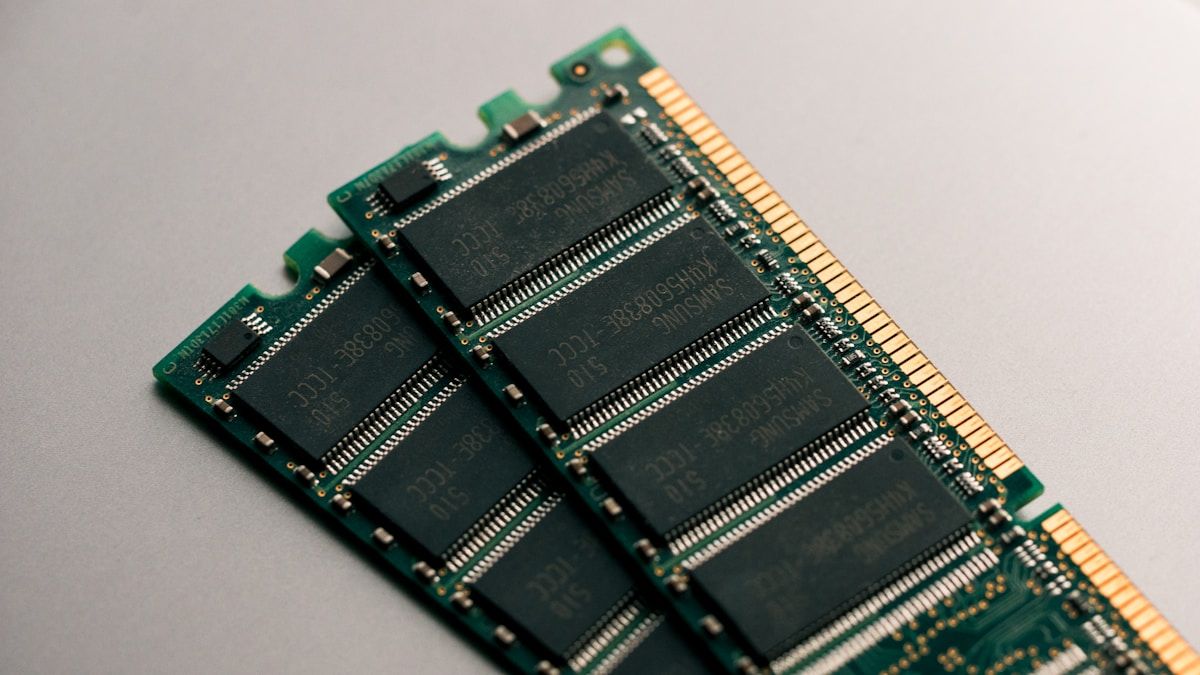
The issue is not a marketing choice. It's physical: there is not enough GDDR7 memory to manufacture these cards. The 3GB GDDR7 modules needed to increase the VRAM of the Super (16GB for the 5070 Super, 20+GB for the 5080 Super) are being absorbed by another much more profitable market: AI.

GDDR7, the nerve of war

To understand why everything is blocked, you have to follow the money. And the money, in 2026, goes to AI servers.

Samsung, SK Hynix, and Micron — the only three memory manufacturers in the world — have massively reoriented their production towards the HBM (High-Bandwidth Memory) for AI accelerators. HBM brings in much more than traditional GDDR7. As a result: all HBM production for 2026 is already sold under long-term contracts to Microsoft, Google, Meta, and Amazon. HBM now accounts for about 20% of the global DRAM wafer capacity — against almost zero before the AI boom. Each wafer converted to HBM is one less wafer for the GDDR7 of your future graphics card.

The numbers are staggering: AI data centers are expected to absorb up to 70% of global memory production in 2026. We were at 20-30% in 2022. Nvidia has already reduced the production of RTX 50 by 30 to 40% in the first half of 2026 due to a lack of GDDR7. And this shortage, according to Counterpoint Research, is not expected to normalize before end of 2027 at best The CEO of Intel even talks about 2028.

In short, gaming comes after AI. Literally.

Puces mémoire GDDR7 sur circuit imprimé, pénurie IA 2026 Click to enlarge

And the current RTX 50 series, where are we at?

Spoiler: it's not glorious either.

The RTX 5090 remains almost impossible to find in stock. Its official MSRP is $1,999, but in reality, you can find it between €3,800 and €4,500 in Europe — when it is available. ASUS listed the ROG Astral RTX 5090 at €6,499. Six thousand five hundred euros for a graphics card. Most of the 5090 end up in pre-built PCs because that's the only channel where manufacturers can sell them.

The RTX 5080 manages to do a little better in terms of availability, but prices remain above MSRP. And the RTX 5070 / 5070 Ti — the models that the majority of players aim for — have a very random availability depending on the stores. In other words, even the current range suffers from the same memory constraints. No magic.

Rayons de cartes graphiques vides en magasin, pénurie GPU 2026 Click to enlarge

AMD RDNA 5: not before mid-2027 at best

You may think that AMD will take advantage of the gap left by Nvidia to draw. Well no.

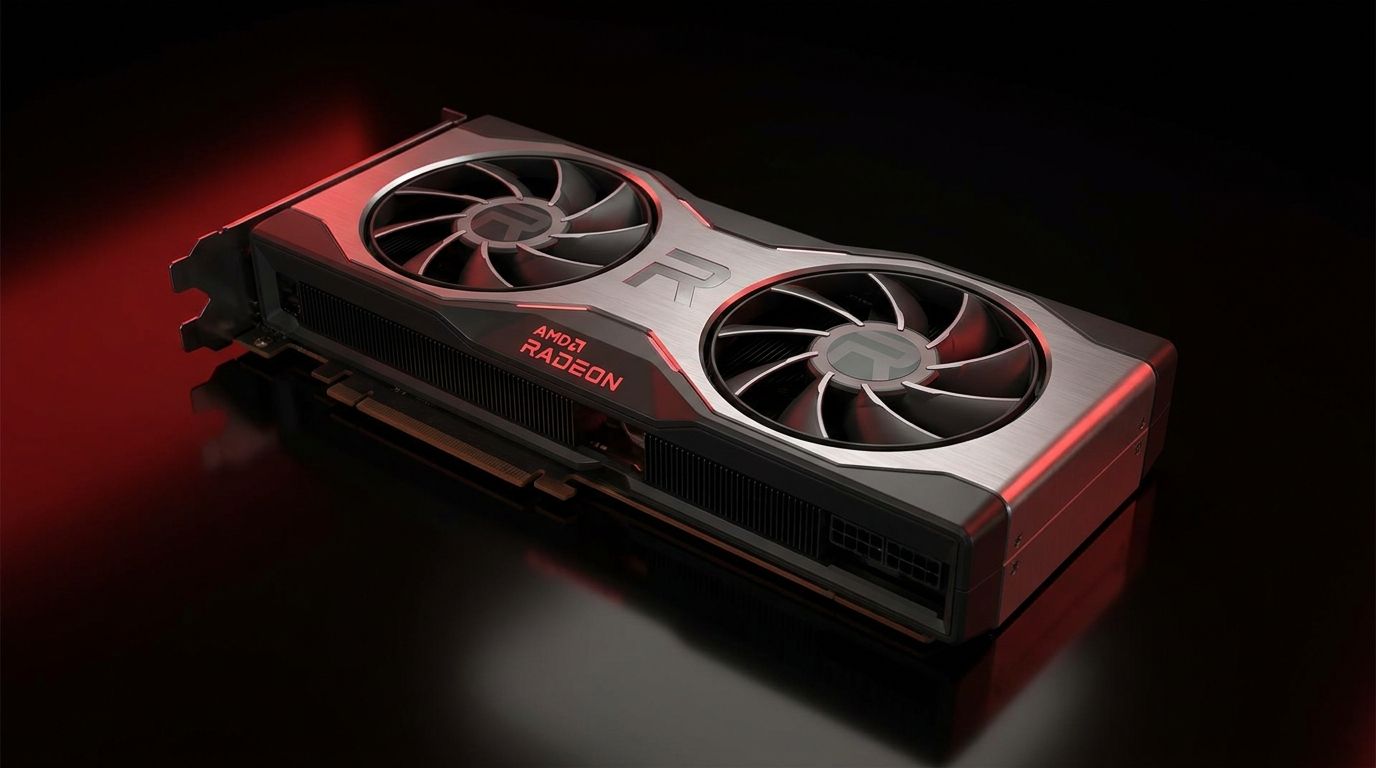
RDNA 4 (Radeon RX 9070 / 9070 XT) was released in early 2026, but AMD decided not to launch a high-end range this generation — no RX 9080 or 9090. The next true generation, RDNA 5 , will not happen before mi-2027 at the earliest . This is what AMD board partners themselves report. A leak from Moore's Law Is Dead quotes a major OEM that would have received the first RDNA 5 desktop samples by mid-2027, with a consumer launch "before the end of 2027". But other partners are more pessimistic and talk about end of 2027 or early 2028 for actual availability in store.

The calculation is simple: AMD skips the high-end RDNA 4 and directly targets RDNA 5 to compete with the RTX 60. Strategically, it makes sense. But for the player waiting for a high-end Radeon in 2026... there's nothing to buy.

Carte graphique AMD Radeon, RDNA 5 attendue 2027 Click to enlarge

Intel Arc Celestial: the wildcard that may never arrive

Intel is the third player in the discrete GPU market. Finally, "player," that's a stretch.

The current range Arc Battlemage (Arc B580, B570) is honest for 1080p/1440p at a low price. But the suite, Xe3 Celestial , is a mystery. Internal roadmaps place it for 2027 with a possible announcement at CES 2027, engraved in TSMC 3nm. Leaks mention 18-24 GB of GDDR7, 256 to 448 bits of interface, and a gain of 20-25% compared to Battlemage.

But — and this is a big but — Hungarian sources and Reddit discussions suggest that Intel could completely cancel Celestial for gaming and jump directly to the next architecture (Druid, 2028). Celestial could end up limited to iGPUs integrated in Nova Lake processors. It's not confirmed, but it's not reassuring. In short, relying on Intel to fill the gap in 2026-2027 is a risky bet.

RTX 60 in 2028: the next true generation is eagerly awaited

And after the Super? The RTX 60 (Rubin architecture). There's no good news there either.

Several credible leakers confirmed in July 2026 that the series RTX 60 will not be released in 2027 . The most likely hypothesis is an announcement at the THE 2028 with a commercial launch in the process. Memory shortage has delayed mass production, and Nvidia continues to prioritize its AI chips (the Rubin platform is primarily designed for the datacenter, gaming comes after).

It gives an unusually long life cycle for the RTX 50. The RTX 4000s lasted two years (2022-2024). The RTX 5000s could last three years (2025-2028). For the player who buys now, it's not necessarily a bad thing - your card will stay "current" longer. But for those hoping for a quick generational leap: cold shower.

Timeline roadmap GPU 2026 2027 2028 Click to enlarge
Product Current Status Estimated Date Reliability
RTX 50 Super (5070S, 5080S) Not announced CES 2027 (Jan. 2027) Average - leak supply chain
AMD RDNA 5 (RX 9800 ?) Not announced From mid-2027 to early 2028 Average — OEM + board partners
Intel Arc Celestial (Xe3) Uncertain 2027 (if not canceled) Low - contradictions
RTX 60 (Ruby gaming) Not announced CES 2028 Average - multiple leaks
End of GDDR7 shortage In progress End of 2027 to mid-2028 High — analysts + manufacturers
Swipe to view more

Should I buy a GPU now or wait?

The question at 600 bucks - literally. That's how we see things.

Buy now if:

  • You don't have a card or your current card is seriously lagging (GTX 1060, RX 580, that kind). Waiting another year with a struggling GPU is pointless.
  • You find a RTX 5070 or RX 9070 XT at MSRP or close. These two cards are excellent for 1440p and they will still be relevant in 2028.
  • You play games that have already been released. No need for the RTX 60 for Crimson Desert or Marvel Rivals.

Wait if:

  • You're aiming for uncompromising 4K ultra. The RTX 50 Super with more VRAM will be much better positioned for that.
  • You have a GPU that still holds up (RTX 3070, 4060 Ti, RX 7800 XT). It runs, it's enough. No need to overpay.
  • You want some VRAM. 12 GB in 2026 is just right. The Super models should come with 16-20 GB. If you're patient, it's worth it.

One thing to keep in mind: prices will not go down. The prices of GDDR7 continue to rise , production is under pressure, and even when the Supers arrive in 2027, there's no guarantee that they will be at MSRP. Waiting "for it to drop" is a risky bet right now.

FAQ

Why doesn't Nvidia release new GPUs in 2026?

The shortage of GDDR7, caused by the massive demand for HBM memory for AI servers, is preventing Nvidia from producing enough gaming GPUs. Memory is prioritized for data centers, which are much more profitable than the gaming market.

When will the RTX 50 Super be released?

Not in 2026. The most recent leaks (Igor's Lab, supply chain) point to an announcement at CES 2027 in January, with commercial availability in the following weeks. Nvidia has not officially confirmed anything.

Is the RTX 5070 worth it in the midst of a shortage?

If you find it at MSRP or close (around 550-600€), yes. It's a solid card for 1440p with DLSS 4. However, if it's at 750€+, it's better to either wait or look at the RX 9070 XT which offers 16GB of VRAM for a similar price.

Will AMD release a high-end GPU in 2026?

No. AMD skipped the high-end RDNA 4. No RX 9080 or 9090. We will have to wait for RDNA 5, scheduled between mid-2027 and early 2028, to see a Radeon compete with the RTX 5080/5090.

Will graphics card prices drop?

Not in the short term. The GDDR7 shortage is driving production costs up, and demand remains strong. Analysts do not see price normalization before the end of 2027, or even mid-2028. If you find a good deal today, don't hesitate - prices could still rise.

The verdict: a blank year, but not desperate
2026 will go down in history as the year of the GPU drought. The first time in three decades that the market has come to a complete standstill in terms of gaming innovations. AI has literally consumed all available memory, and GPU manufacturers have no choice but to wait.

But hey, it's not the end of the world either. The RTX 5070, 5080, and RX 9070 XT exist, they are performant, and they will remain relevant for a long time since nothing is replacing them anytime soon. The real problem is availability and prices — and that, only time (and the end of the AI madness) can solve.

Meet us at CES 2027 to see if the RTX 50 Super live up to their promise. Until then, if you find a decent GPU at the right price, go for it. No one knows if it will be better in six months.