Best USB mic for streaming and gaming in 2026: QuadCast 2, Yeti GX, Blue Yeti or Razer Seiren?

USB microphone Streaming HyperX Logitech Razer Discord

USB mic comparison for streaming and gaming in 2026: dynamic vs condenser, QuadCast 2, Yeti GX, Blue Yeti, Seiren and SoloCast by profile.

Which USB mic should you buy for streaming in 2026?

The best USB mic for streaming depends on your room and use case, not a single score. In a noisy room or with a mechanical keyboard, a dynamic mic isolates your voice better. In a quiet room, a condenser captures more detail. For Discord or a first setup, a simple cardioid model is often enough.

Google’s top results often push the Shure MV7+, RØDE NT-USB+ and Elgato Wave:3. Those three are not in our catalogue — we say so clearly. Here we compare what we actually list: HyperX QuadCast 2, QuadCast S, DuoCast, SoloCast, Logitech Yeti GX, Blue Yeti, Razer Seiren V2 X and Seiren X.

For the rest of a streaming desk, see our For the rest of a streaming desk, see our Stream Deck guide, the , the top 3 GPUs for streaming and the and the wireless gaming headset guide.

Profile Mic type to aim for Our catalogue pick Best fit
Noisy room / mech keyboard Dynamic supercardioid Logitech Yeti GX Rejects more desk noise
Quiet room, solo stream Condenser, multi-pattern HyperX QuadCast 2 (black or Frost) Flexible all-rounder
Two-person podcast / interviews Condenser, 4 patterns Blue Yeti Bidirectional interviews
Discord / small budget Simple cardioid condenser HyperX SoloCast or Razer Seiren X Plug-and-play entry
Compact RGB desk Condenser, 2 patterns HyperX DuoCast Smaller footprint
Swipe to view more

Dynamic vs condenser: what actually changes

A dynamic mic mainly hears what is right in front of it. It suits an untreated room, a loud PC or a mechanical keyboard. The Yeti GX is the only dynamic USB mic in this comparison.

A condenser is more detailed and more sensitive. It often sounds more “studio”… and it also picks up fans, clicks and room reverb. QuadCast 2, QuadCast S, DuoCast, SoloCast, Blue Yeti, Seiren V2 X and Seiren X are condensers.

Simple rule: noisy room → dynamic; quiet room → condenser; Discord / chat → a simple cardioid is often enough.

Noisy room or mechanical keyboard: Logitech Yeti GX

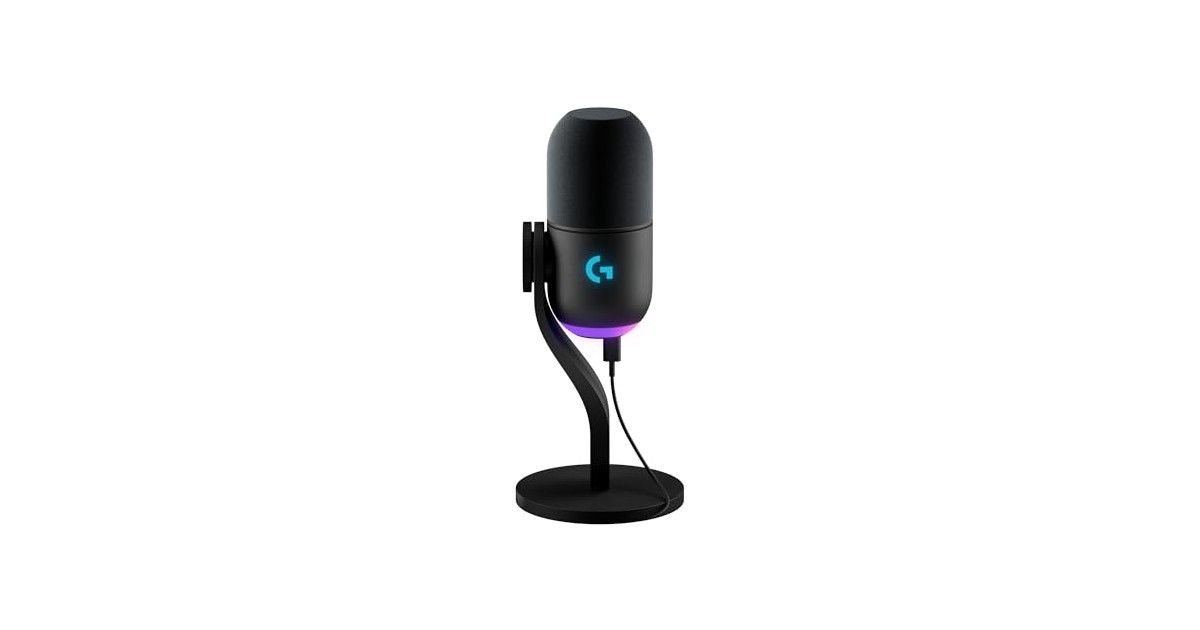
Product photo of the black Logitech Yeti GX Click to enlarge

The Yeti GX is a dynamic supercardioid USB mic built for gaming. Logitech highlights a capsule that ignores more mouse and keyboard clicks, LIGHTSYNC lighting on two zones, and Blue VO!CE tools in G HUB (filters, effects, smart audio lock).

USB-C connection, removable stand, boom adapter for ⅜″ / ⅝″. No headphone jack on the mic: monitoring happens on the PC / headset. It is our catalogue pick for an untreated room.

Logitech Yeti GX

Dynamic supercardioid USB mic for streaming and Discord in noisy rooms.

Pros
  • Dynamic supercardioid capsule
  • LIGHTSYNC + Blue VO!CE via G HUB
  • Boom adapter included
Cons
  • No headphone jack on the mic
  • Single pattern only
FranceCheck the price in my country

Quiet room and solo streaming: HyperX QuadCast 2

The QuadCast 2 keeps the QuadCast basics (tap-to-mute, 4 patterns, shock mount, 3.5 mm jack) with 24-bit / 96 kHz capture, an aluminium body and a multifunction knob (gain, playback volume, monitoring, pattern). Compatible with PC, Mac, PS4, PS5, Switch and Steam Deck according to HyperX.

Four modes: cardioid, omnidirectional, bidirectional and stereo. Ideal for solo use in a decent room, with the option to record a duo or stereo without changing mics. Available in black and Frost in the catalogue.

HyperX QuadCast 2 Black

USB condenser 24-bit / 96 kHz, 4 patterns, knob and removable shock mount.

Pros
  • 24-bit / 96 kHz
  • 4 patterns + multifunction knob
  • Removable shock mount and headphone jack
Cons
  • Condenser picks up more room noise
  • Lighting limited to HyperX red
FranceCheck the price in my country

Two-person podcast or multi-use: Blue Yeti

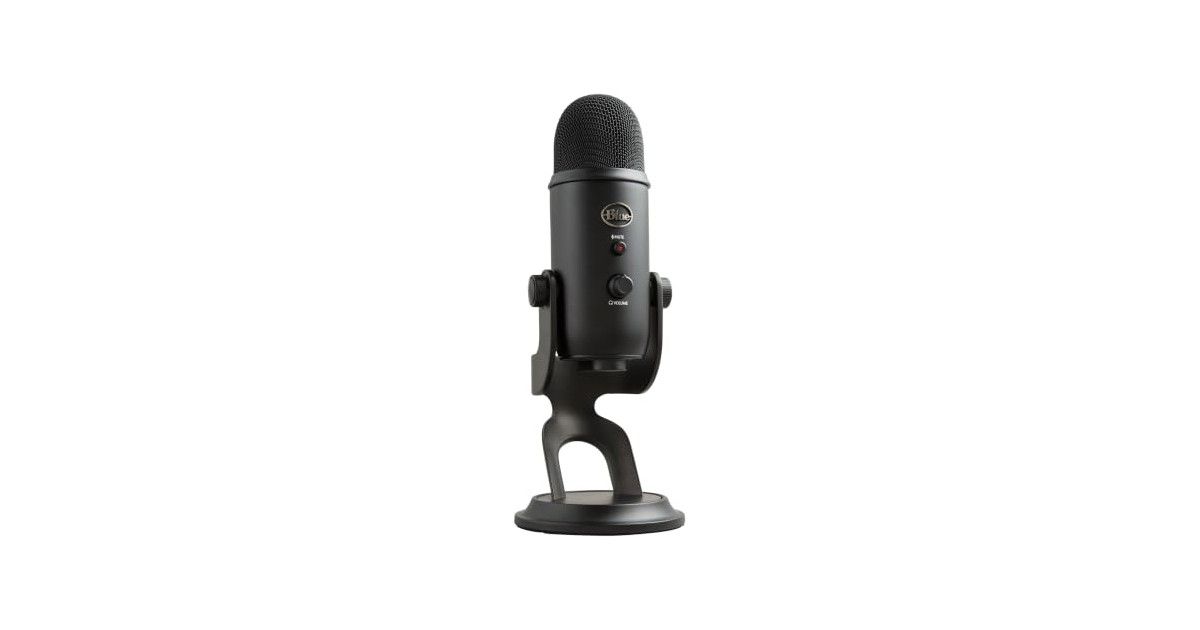
Product photo of the black Blue Yeti Click to enlarge

The Blue Yeti remains the flexible USB condenser reference: three 14 mm capsules, four patterns (cardioid, omni, bidirectional, stereo), mute, gain, headphone volume, and Blue VO!CE via G HUB. 20 Hz–20 kHz response, plug-and-play on PC / Mac.

The heavy stand is stable but transmits desk vibrations: a boom arm helps a lot. Choose it if you stream solo in cardioid and also want to interview someone facing you (bidirectional) without buying a second mic.

Blue Yeti (Blackout)

USB condenser with 4 patterns for streaming, podcasts and interviews.

Pros
  • 4 patterns on one mic
  • Zero-latency headphone jack
  • Blue VO!CE / G HUB ecosystem
Cons
  • Stand transmits desk vibrations
  • Bulky on a small desk
FranceCheck the price in my country

Discord and small budget: SoloCast and Seiren X

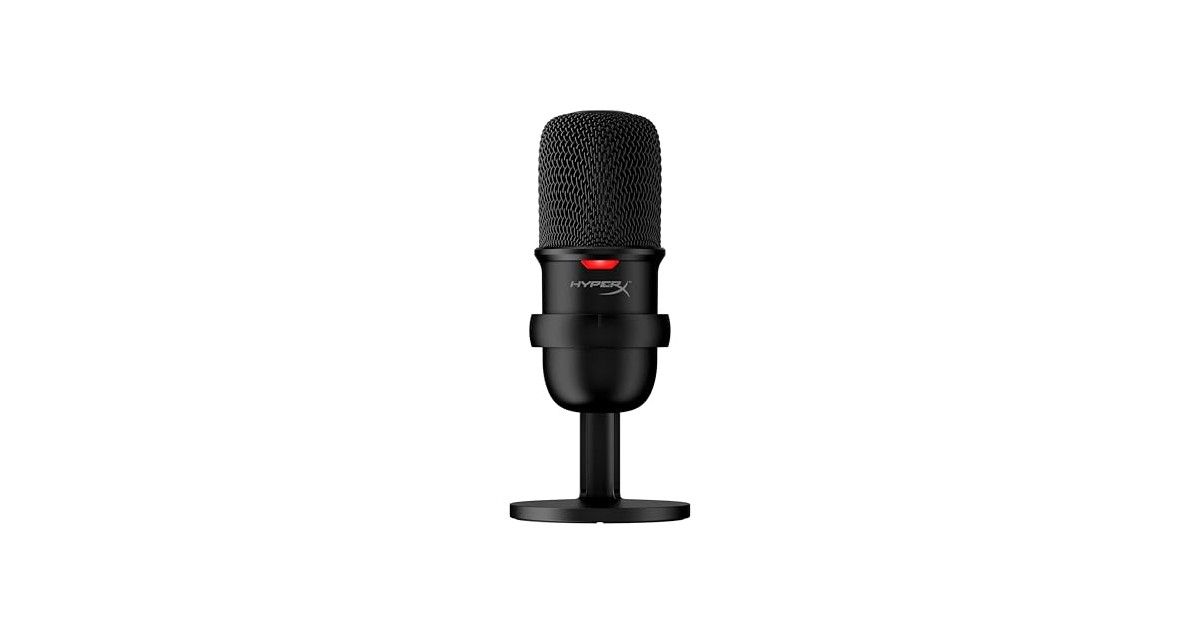
Product photo of the black HyperX SoloCast Click to enlarge

For voice chat, Discord and a first stream, a simple cardioid condenser is enough. The HyperX SoloCast is USB-C plug-and-play, with tap-to-mute LED, adjustable stand and ⅜″ / ⅝″ threading. No physical gain knob or headphone jack: you set the level in Windows / OBS.

The Razer Seiren X targets the same use in a compact body, supercardioid, with built-in shock mount and mute. No current US storefront block was required beyond the catalogue card for this older model in our FR draft; on EN we keep the catalogue product card.

HyperX SoloCast

Simple cardioid USB condenser for Discord and a first stream.

Pros
  • USB-C plug-and-play
  • Tap-to-mute with LED
  • Boom compatible ⅜″ / ⅝″
Cons
  • No physical gain control
  • No headphone jack
  • Single pattern
FranceCheck the price in my country
Razer Seiren X

Razer Seiren X

Compact supercardioid

Pros

  • • Compact form factor
  • • Supercardioid pattern
  • • Built-in shock mount

Cons

  • • Older generation vs V2 X
  • • No verified FR marketplace listing in this run

Mid-range compact: DuoCast and Seiren V2 X

The HyperX DuoCast adds an RGB ring, two modes (cardioid / omni), 24-bit / 96 kHz, tap-to-mute and a discreet shock mount. Fewer patterns than the QuadCast 2, but more compact.

The Razer Seiren V2 X uses a 25 mm condenser capsule, a supercardioid pattern, a gain limiter, headphone monitoring and a built-in shock mount. A solid pick if you want tighter voice isolation than a SoloCast without moving to the dynamic Yeti GX.

Razer Seiren V2 X

25 mm supercardioid USB condenser with limiter and monitoring.

Pros
  • 25 mm capsule
  • Supercardioid + limiter
  • Headphone jack and shock mount
Cons
  • Single pattern
  • Proprietary USB cable often mentioned
FranceCheck the price in my country

For RGB looks: HyperX QuadCast S

The QuadCast S is still in the catalogue: USB condenser, 4 patterns, RGB via NGENUITY, shock mount, built-in pop filter, headphone jack and tap-to-mute. HyperX now pushes the QuadCast 2 / 2 S as successors; the S still fits if you want strong RGB and four patterns.

HyperX QuadCast S

RGB USB condenser with 4 patterns, shock mount and headphone jack.

Pros
  • Dynamic RGB
  • 4 patterns
  • Shock mount + pop filter
Cons
  • Higher catalogue range than QuadCast 2
  • Condenser sensitive to the room
FranceCheck the price in my country

How to set up your USB mic (OBS, Discord, boom arm)

Distance and boom arm

Keep the mic about 10–20 cm from your mouth, slightly off-axis to reduce plosives. A boom arm frees desk space and reduces shocks from the desk surface.

Levels

In Windows, avoid 100% input. In OBS, keep peaks out of the red, then add a light noise gate, compressor and limiter if needed. On QuadCast 2 / DuoCast / Blue Yeti / Yeti GX, set hardware gain first before pushing software gain.

Discord

Disable Discord noise cancellation if you already use NVIDIA Broadcast / OBS filters, to avoid double processing. Select the correct input device (the USB mic name).

Catalogue model recap

Model Type Patterns Headphone monitoring Our use
Yeti GX Dynamic USB 1 (supercardioid) No (on the mic) Noisy room
QuadCast 2 Condenser USB 4 Yes Flexible solo stream
Blue Yeti Condenser USB 4 Yes Podcast / multi-use
DuoCast Condenser USB 2 Yes / software Compact RGB
SoloCast Condenser USB 1 (cardioid) No Discord / budget
Seiren V2 X Condenser USB 1 (supercardioid) Yes Mid-range focused voice
Seiren X Condenser USB 1 (supercardioid) Yes Compact entry
QuadCast S Condenser USB 4 Yes RGB 4 patterns
Swipe to view more

FAQ

What is the best USB mic for streaming in 2026 in this guide?

Noisy room: Yeti GX. Quiet solo room: QuadCast 2. Podcast / interviews: Blue Yeti. Discord on a budget: SoloCast.

Dynamic or condenser?

Dynamic for a mechanical keyboard / untreated room. Condenser for a quiet room when you want more detail.

Is a USB desk mic better than a headset mic?

Yes if you stream or record often: a dedicated desk mic usually captures voice more cleanly than a gaming headset mic, if you place it correctly.

Why not the Shure MV7+ or RØDE NT-USB+ here?

They are not in our product catalogue at the time of writing. We do not invent listings: we mention them as SERP references, then point to models we can actually track.

Do you need a boom arm?

Strongly recommended whenever a keyboard shares the desk, especially with Yeti and QuadCast. The included stand is fine for testing.

Verdict

Choose your profile first, not the busiest feature list. Yeti GX if the room is noisy. QuadCast 2 for solo streaming in a decent room. Blue Yeti when you need four patterns. SoloCast or Seiren X for Discord and a first budget. Then add a boom arm, a good headset, and a Stream Deck if you automate your live.