Gigabyte B850 AORUS ELITE X3D: the AM5 motherboard built for Ryzen X3D (Turbo Mode, 4× M.2, Wi‑Fi 7)

Gigabyte B850 AM5 motherboard Ryzen X3D

B850 AORUS ELITE X3D brief: X3D Turbo Mode 2.0, 16+2+2 VRM, 4× M.2, Wi‑Fi 7. Who should buy it versus a standard B850.

Why this B850 AORUS ELITE X3D actually matters for a Ryzen X3D build

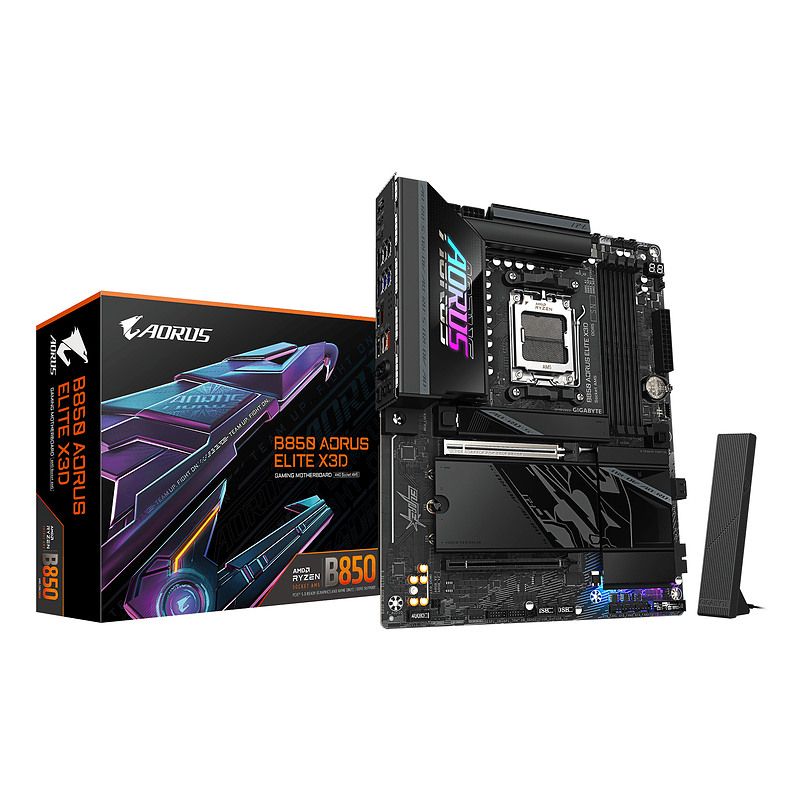
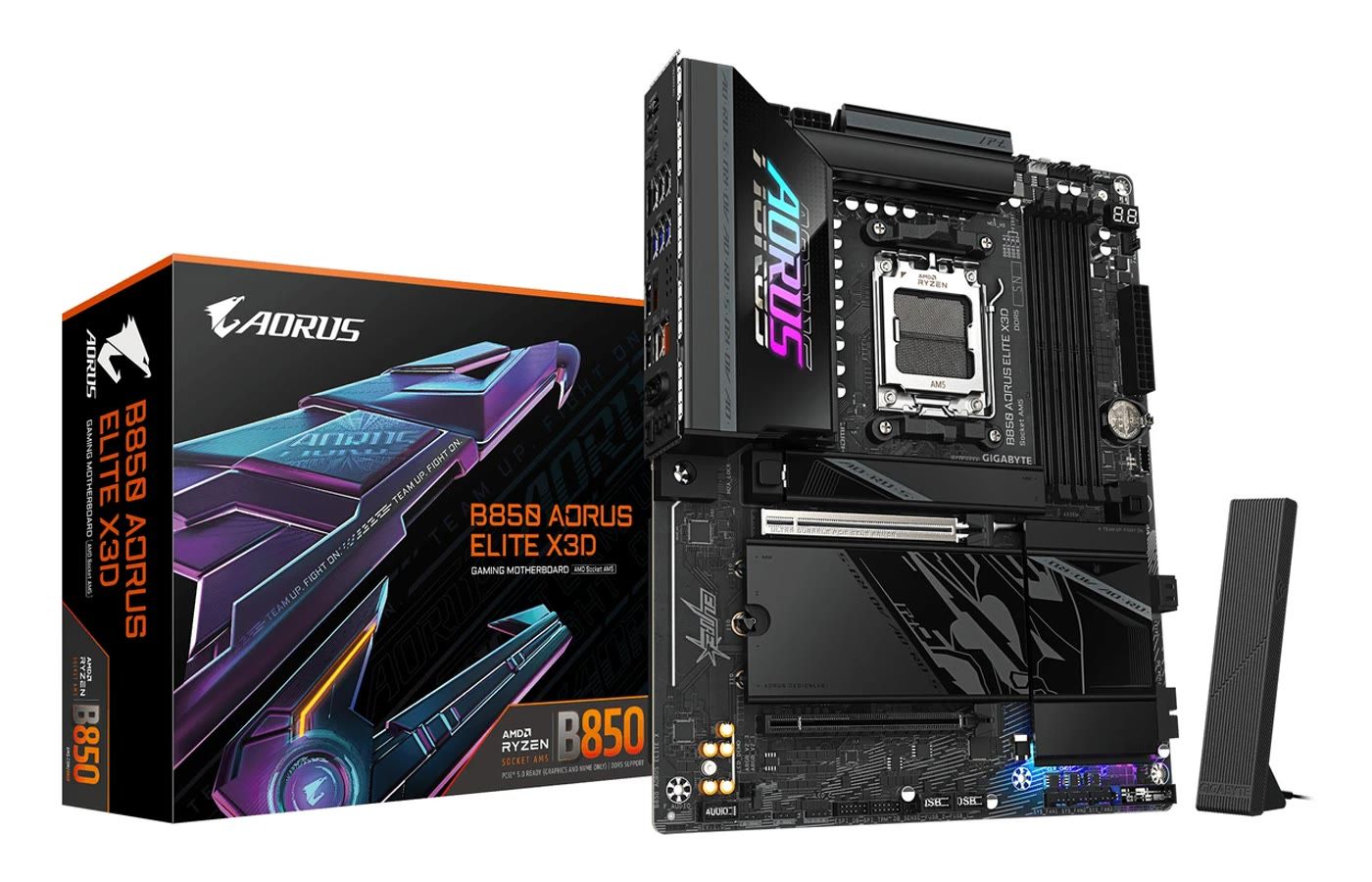
You’re building a PC around a Ryzen X3D and asking the blunt question: will any B850 do, or is there a board actually designed for these CPUs? Spoiler: Gigabyte shipped a model that stops pretending. The B850 AORUS ELITE X3D isn’t just an ELITE WIFI7 with a sticker. It’s an AM5 platform recalibrated for cache-heavy gaming: X3D Turbo Mode 2.0, 16+2+2 VRM, four M.2 slots (two of them PCIe 5.0), 5GbE, and Wi‑Fi 7.

Confirmed on the vendor side (Gigabyte / AORUS product page) and covered on September 17, 2026 by PC Central. VideoCardz and Pause Hardware had already documented the spec sheet as early as June 2026 (BIOS F2a, AGESA 1.3.0.1b). This is a real, listed product — not a slide rumor.

In this write-up I’ll tell you who should pay for it versus a “standard” B850, what’s actually confirmed, and where I’d put my money if I had a 9800X3D (or a still-excellent 7800X3D) on the desk.

Choose your delivery country to see prices based on your location

Filters

Aucun résultat trouvé

No results found

Try adjusting your search criteria

You can also set up notifications for the active filter and get alerted about restocks, price drops, etc.

To do this, you need to be connected via discord

GIGABYTE B850 AORUS Elite X3D WiFi ATX AM5 DDR5

GIGABYTE B850 AORUS Elite X3D WiFi ATX AM5 DDR5

the B850 built for Ryzen X3D (Turbo Mode, Wi‑Fi 7)

M.2 storage
Networking I/O
Value for money
Ryzen X3D relevance
VRM / power delivery

Pros

  • • X3D Turbo Mode 2.0 aimed at cache-heavy Ryzen CPUs
  • • 16+2+2 digital VRM (60A DrMOS) on a 6-layer 2 oz PCB
  • • 4× M.2 including 2× PCIe 5.0 + Thermal Guard
  • • 5GbE + Wi‑Fi 7: networking finally worthy of a 2026 ELITE
  • • AM5 socket / DDR5 up to 8200 MT/s (OC) + EXPO

Cons

  • • Only 2× SATA 6 Gb/s — painful if you still keep SATA HDDs/SSDs
  • • Premium vs a standard B850 AORUS ELITE WIFI7
  • • Second PCIe slot (x4) drops out when M2D_SB is occupied
  • • Availability and street pricing still volatile right after launch

Confirmed specs: what Gigabyte is actually putting on the table

Before we talk “turbo mode” and AORUS marketing, lock the baseline. Everything below comes from vendor specs (Gigabyte / AORUS store) cross-checked with VideoCardz and Pause Hardware. Nothing invented.

  • AM5 socket — Ryzen 7000 / 8000 / 9000
  • AMD B850 chipset, ATX form factor
  • 16+2+2 digital twin VRM (60A DrMOS), 8+8-pin UD CPU power
  • 6-layer PCB, 2 oz copper
  • 4× DDR5 up to 8200 MT/s (OC), 256 GB max, EXPO
  • 4× M.2: 2× PCIe 5.0 + 2× PCIe 4.0, Thermal Guard + EZ-Flex
  • Only 2× SATA 6 Gb/s
  • 1× PCIe 5.0 x16 (UD Slot) + 1× PCIe 4.0 x4 (disabled if M2D_SB is occupied)
  • 5GbE LAN (Realtek RTL8126) + Wi‑Fi 7 (RTL8922AE) + Bluetooth 5.4
  • Realtek ALC1220 audio
  • Q-Flash Plus, Power / Reset / Clear CMOS buttons on the I/O

Important: don’t mix it up with the classic B850 AORUS ELITE WIFI7. That one stays on 14+2+2, 8+4-pin, 3 M.2, and 2.5GbE. The X3D clearly steps up power delivery, storage, and wired networking.

X3D Turbo Mode 2.0: real differentiator, or just BIOS polish?

Gigabyte X3D Turbo Mode 2.0 BIOS feature illustration Click to enlarge

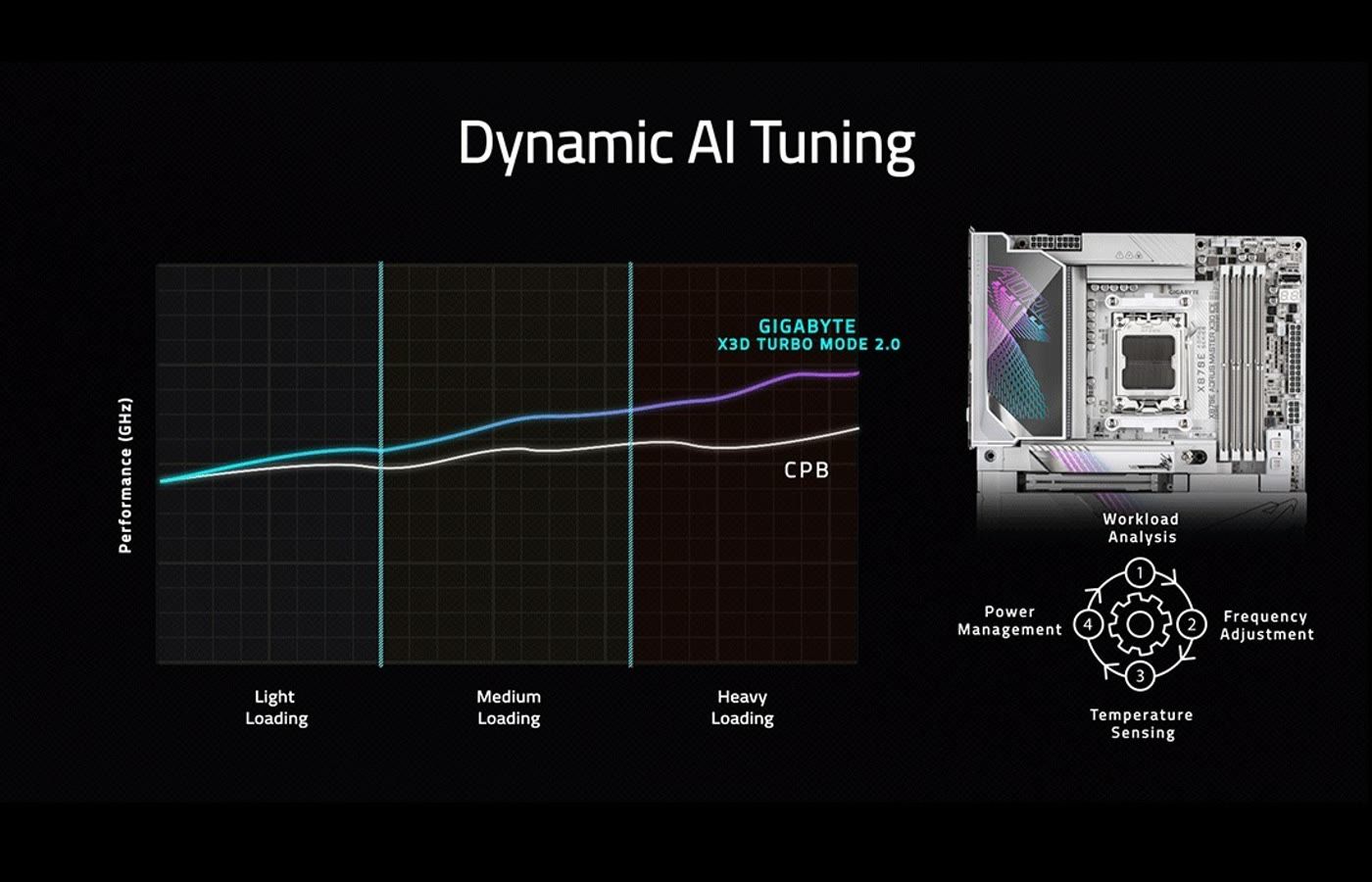
This is the differentiator on the sheet. Gigabyte claims X3D Turbo Mode 2.0 uses an onboard AI model plus dedicated hardware circuits to tune Ryzen X3D parameters in real time. Two profiles: Extreme Gaming Mode and Max Performance Mode.

What we can confirm today: the feature is officially listed on the B850 AORUS ELITE X3D product page, with the usual one-click pitch and marketing gains up to ~25% “depending on the game.” What we cannot confirm here: an independent DropReference bench on 9800X3D / 7800X3D with and without the mode. So I’ll be blunt: treat vendor percentages as a commercial promise, not absolute truth.

If you’re buying an X3D, you want a board that doesn’t force you to dig through twenty obscure options. A dedicated gaming profile — even an imperfect one — already beats a copy-paste generic BIOS.

In practice, my expected use: Extreme Gaming for competitive 1080p/1440p, Max Performance if you mix gaming with encode / browser / Discord / OBS. And always keep AGESA / BIOS current (F2a with AGESA 1.3.0.1b was already documented in June 2026).

AORUS memory extras: D5 Bionic Corsa / Zenith Memory to help EXPO and DDR5 OC. Useful if you’re aiming for tight 6000–6400 CL (the AM5 sweet spot) rather than chasing 8200 MT/s for a screenshot brag.

16+2+2 VRM and 6-layer PCB: built to hold an X3D without drama

B850 AORUS ELITE X3D VRM heatsink and PCB overview Click to enlarge

A Ryzen X3D isn’t a watt monster like a full-tilt 9950X, but you still want clean power, healthy VRM temps, and zero weird throttling across a three-hour raid. The 16+2+2 dual-digital design, 60A DrMOS, reinforced dual 8-pin (UD Solid Pin), 6-layer 2 oz PCB: that’s serious kit for a B850 “ELITE,” not entry-level in a trench coat.

Gigabyte highlights a rear PCB Thermal Plate with a claimed ~14% thermal improvement, plus Advanced VRM armor (heatpipe, 5 W/mK pad). Again: vendor numbers. What matters to you is that the board doesn’t look like a toaster around the MOSFETs after a Cyberpunk path-tracing session.

Smart Fan 6 is here with up to eight PWM/DC headers, Slope/Stair curves, and Fan Stop. You can mount a 240/360 AIO without fighting weird extensions. For a quiet build + X3D (which already likes staying reasonable in gaming power draw), it fits.

4× M.2 including 2× PCIe 5.0: modern storage, not a 2022 compromise

Four M.2 slots on a B850, including two CPU-side PCIe 5.0 x4 and two chipset-side PCIe 4.0: exactly what I want in 2026. OS + games on Gen5, scratch / capture / Steam library on Gen4, and you still have headroom. Every slot gets Thermal Guard; EZ-Flex (flexible backing) aims for up to ~12 °C cooler SSD temps per Gigabyte.

Watch the documented trap: the secondary PCIe 4.0 x4 slot is disabled if you occupy M2D_SB. Read the manual before planning RAID or a capture card in that slot. And yes, only two SATA ports: if you hoard 2018-era 8 TB HDDs, look elsewhere or add a controller. This board owns the NVMe world.

GPU side: reinforced PCIe 5.0 x16 (UD Slot, higher advertised shear/retention). Fine for a 5070 / 5080 / 9070 XT. EZ-Latch Plus on PCIe and M.2 is real DIY comfort, not brochure fluff.

5GbE + Wi‑Fi 7: an ELITE that finally doesn’t cheap out on networking

B850 AORUS ELITE X3D rear I/O with Wi-Fi 7 and 5GbE Click to enlarge

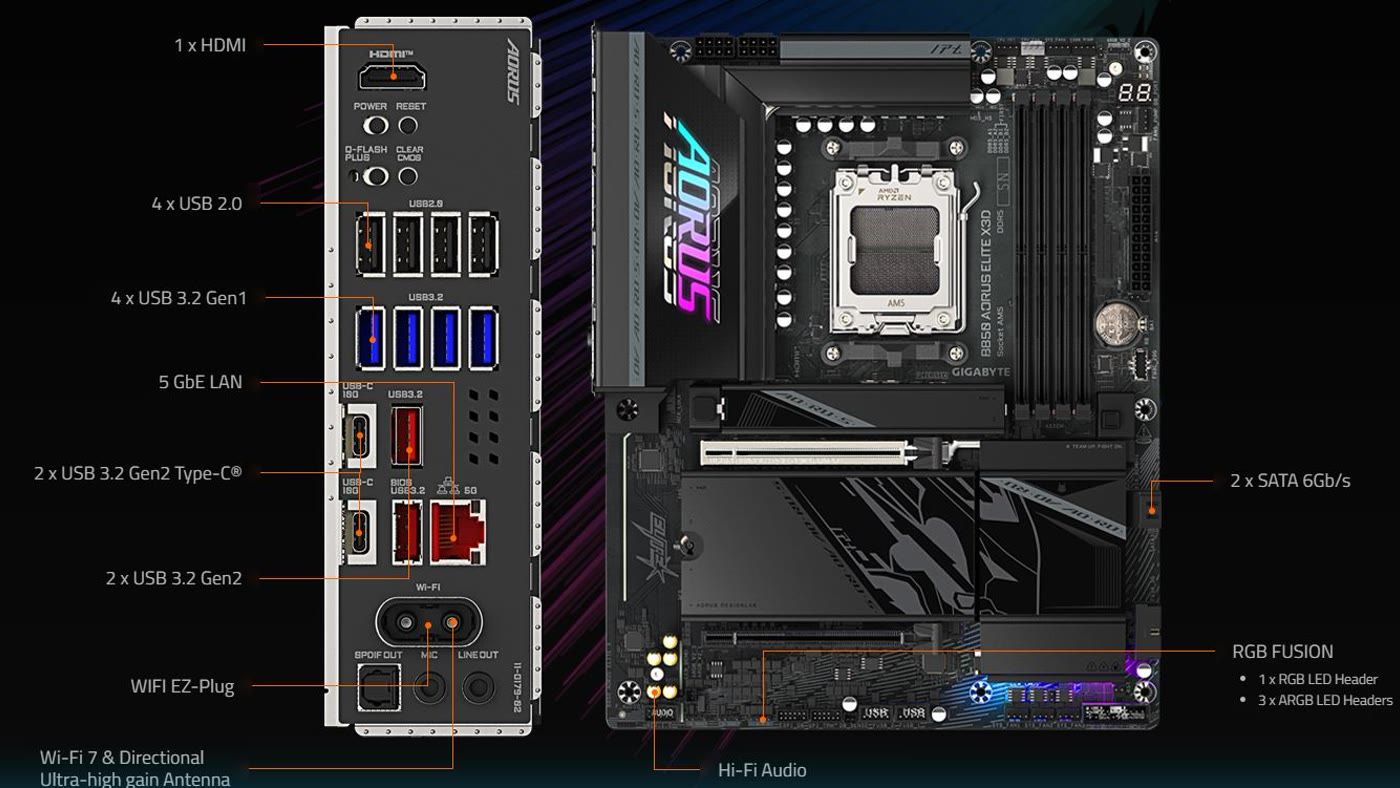
The 5GbE LAN (Realtek RTL8126) versus the classic ELITE WIFI7’s 2.5GbE shows up the moment you have a 2.5/5G NAS or a strong fiber gateway. Locally, copying replays / datasets / ISOs gets less ridiculous. Wi‑Fi 7 (RTL8922AE) + BT 5.4 with a high-gain directional antenna, plus DriverBIOS (Wi‑Fi driver preloaded): boot Windows and you’re online without hunting for a backup USB driver stick.

Generous rear I/O: 2× USB-C 10 Gb/s, 2× USB-A 10 Gb/s, 4× USB 5 Gb/s, 4× USB 2.0, HDMI 2.1, S/PDIF, Power / Reset / Clear CMOS / Q-Flash Plus buttons. For builders who flash the BIOS before seating the CPU, Q-Flash Plus remains an AM5 must-have.

Who should buy it versus a standard B850?

Let’s be direct. If your CPU is a non-X3D Ryzen 5 7600 and you play casual 1080p, a simpler B850 (or a good discounted B650) is enough. You don’t need to pay for the X3D Turbo packaging + 5GbE + 4 M.2 for that.

I would clearly aim for this ELITE X3D if:

  • You have (or you’re ordering) a 7800X3D / 9800X3D / 9950X3D and want a gaming-aligned board
  • You want two Gen5 SSDs without fighting over a single “premium” slot
  • You run a fast local network (NAS, lab, 5G transfers)
  • You want a stronger VRM than the 14+2+2 ELITE WIFI7
  • You’re staying on AM5 for a few more years (Zen 6/7 still on this socket per the public roadmap)

If you need lots of SATA, Thunderbolt, or an ultra-tight budget under ~$210–$230 street (≈ €180–€200 at ~1.15 USD/EUR), look at a simpler B850/B650 instead. Positioning here is “ELITE that plays in serious X3D-build territory,” not “cheapest board on the shelf.”

Pricing and availability: what we actually saw (EUR → USD)

No invented prices. As of September 18, 2026 :

  • Official AORUS store: €219.35 listed → about $252 incl. tax on the EU storefront (vendor offer, stock varies)
  • Alternate.fr: about €249.90 → roughly $287 (listed in stock; shipping extra)
  • Other EU resellers (TopBiz, price trackers): ranges often seen around €250–€295 → about $285–$340 depending on stock
  • LDLC / TopAchat: no clear listing at writing time — check before you buy

On DropReference, always compare the live price rather than a number frozen in an article. $35–$80 swings between the vendor store and regional resellers are classic during rollout. US street tags may differ; treat these as converted EU observations, not invented US MSRPs.

FAQ — Gigabyte B850 AORUS ELITE X3D

Is the B850 AORUS ELITE X3D compatible with my Ryzen 7800X3D or 9800X3D?

Yes. Official AM5 socket, listed support for Ryzen 7000 / 8000 / 9000. Flash the latest BIOS (recent AGESA) beforehand or via Q-Flash Plus if your revision requires it.

Does X3D Turbo Mode 2.0 replace a solid EXPO / PBO setup?

No. It’s an X3D gaming-profile accelerator, not an excuse to ignore stable EXPO and sane basics (typically 6000 CL30 RAM, Curve Optimizer if you know what you’re doing). Use it as a starting point, measure your games, keep what works.

What’s the concrete difference versus the B850 AORUS ELITE WIFI7?

Stronger VRM (16+2+2 vs 14+2+2), dual 8-pin, 4 M.2 including 2 Gen5, 5GbE LAN instead of 2.5GbE, plus the X3D Turbo Mode 2.0 branding/stack. Trade-off: only 2 SATA instead of 4.

Does Wi‑Fi 7 actually change gaming?

If you’re on Ethernet, no. If you’re on Wi‑Fi, Wi‑Fi 7 mainly helps stability / latency / 6 GHz when your router keeps up. For many builders, this board’s real networking upgrade is wired 5GbE.

Can I easily overclock memory to 8200 MT/s?

“Up to 8200 MT/s” is a vendor OC ceiling, not a plug-and-play promise. Start with a QVL EXPO 6000–6400 kit. Beyond that it’s CPU/IMC lottery plus manual tuning. D5 Bionic Corsa can help — it doesn’t work miracles.

Is it still worth it if I won’t buy an X3D for six months?

Yes if you already want dual Gen5 storage + 5GbE + a stout VRM. Otherwise grab a cheaper solid B850 now and upgrade the board later — AM5 allows that. But if the X3D is coming soon, you might as well start on the SKU aimed at it.

Builder verdict: a B850 that finally owns the X3D brief

The Gigabyte B850 AORUS ELITE X3D is a slightly late but coherent answer to a simple ask: “I want an AM5 gaming board for my X3D without jumping to a ~$400 X870E (≈ €350).” You get a more serious VRM than the base ELITE WIFI7, four modern M.2 slots, 5GbE, Wi‑Fi 7, and a BIOS that finally speaks X3D Turbo Mode 2.0.

It isn’t magic: Turbo Mode gains still need game-by-game validation, SATA is minimal, and street pricing still moves. But for a high-refresh 1440p 9800X3D / 7800X3D build, the package makes sense. If that’s your lane, stop wondering whether “any B850” will do — this one at least has the guts to be honest about its target.

Main sources: PC Central (Sep 17, 2026), Gigabyte product page, AORUS store, VideoCardz, Pause Hardware.