AMD Radeon RX 9060 XT: test, specs and verdict of the mid-range RDNA 4 GPU

RX 9060 XT AMD RDNA 4 Mid-range GPU 2026

The RX 9060 XT arrives with RDNA 4 and 16 GB of GDDR6. We dissect the specs, benchmarks, and positioning against the RTX 5060 and the 4060 Ti.

RX 9060 XT: AMD hits the right spot

450 euros. That's what you need to spend in May 2026 to get your hands on the new Radeon RX 9060 XT 16 GB , the mid-range GPU from AMD in RDNA 4 architecture. And frankly, given the context — skyrocketing RAM, customs duties driving up everything else — a decent GPU below the 500 bucks mark deserves some attention.

The 9060 XT is the mid-range counterpart of the RX 9070 and 9070 XT released earlier. Same RDNA 4 architecture, but a smaller die (Navi 44 instead of Navi 48), specs revised downwards to maintain a contained TDP, and above all a price targeting the 1080p/1440p segment. The GPU that 80% of players should consider, in theory.

We will scrutinize everything: the raw specs, the gaming benchmarks, the power consumption, the positioning against NVIDIA's RTX 5060 (which is coming at the end of May) and the aging RTX 4060 Ti. And we end with a clear verdict.

Choose your delivery country to see prices based on your location

Filters

Sapphire RX 9060XT GAMING OC 16GB Black

Sapphire RX 9060XT GAMING OC 16GB Black

459€

(8 Vendors)
Length: 240
Top brand
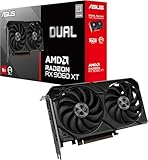
ASUS DUAL RX 9060 XT 16GB GDDR6 2xDP HDMI

ASUS DUAL RX 9060 XT 16GB GDDR6 2xDP HDMI

419€

(11 Vendors)
Length: 202
Top brand
Sapphire RX 9060 XT Pure 16GB GDDR6 White

Sapphire RX 9060 XT Pure 16GB GDDR6 White

400€

(10 Vendors)
Length: 240
Top brand
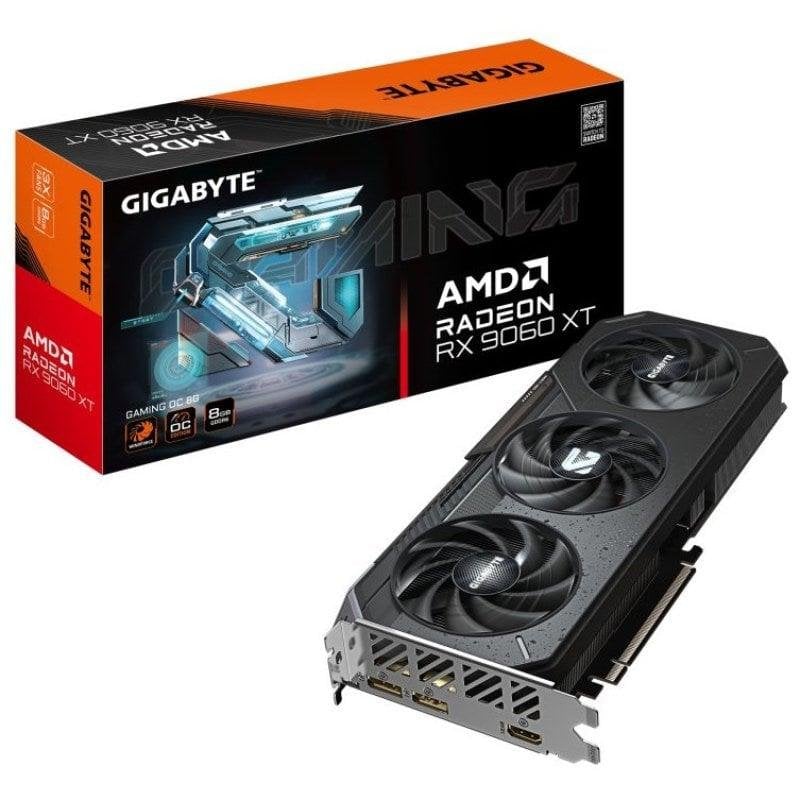
Gigabyte Radeon RX 9060 XT GAMING OC 8GB GDDR6

Gigabyte Radeon RX 9060 XT GAMING OC 8GB GDDR6

298€

(8 Vendors)
Brand: Gigabyte
Good brand
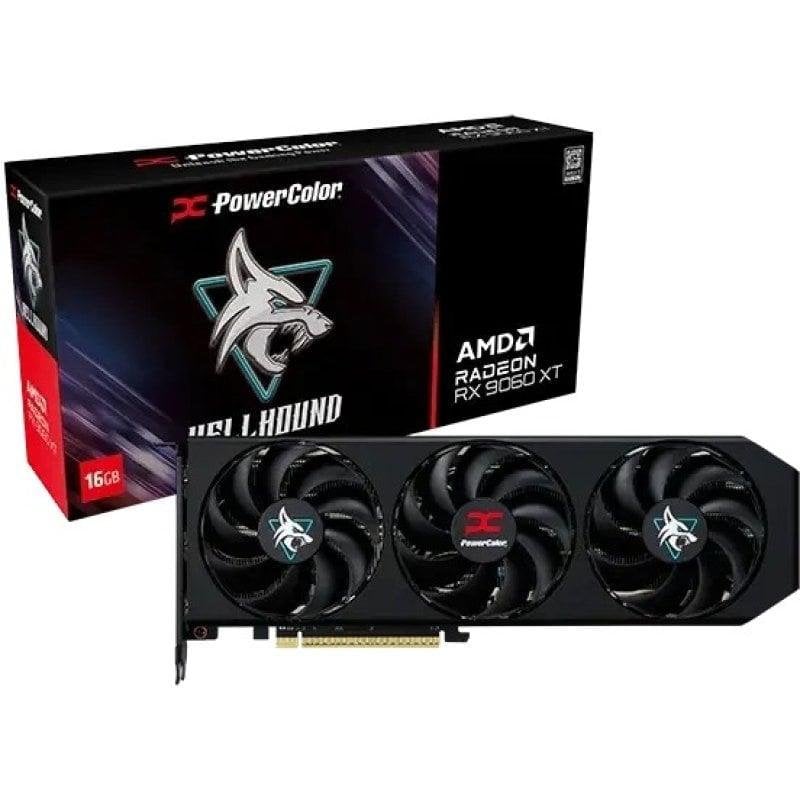
PowerColor Hellhound RX 9060 XT OC 16GB GDDR6 Blue Arctic

PowerColor Hellhound RX 9060 XT OC 16GB GDDR6 Blue Arctic

424€

(6 Vendors)
Brand: Powercolor
Top brand
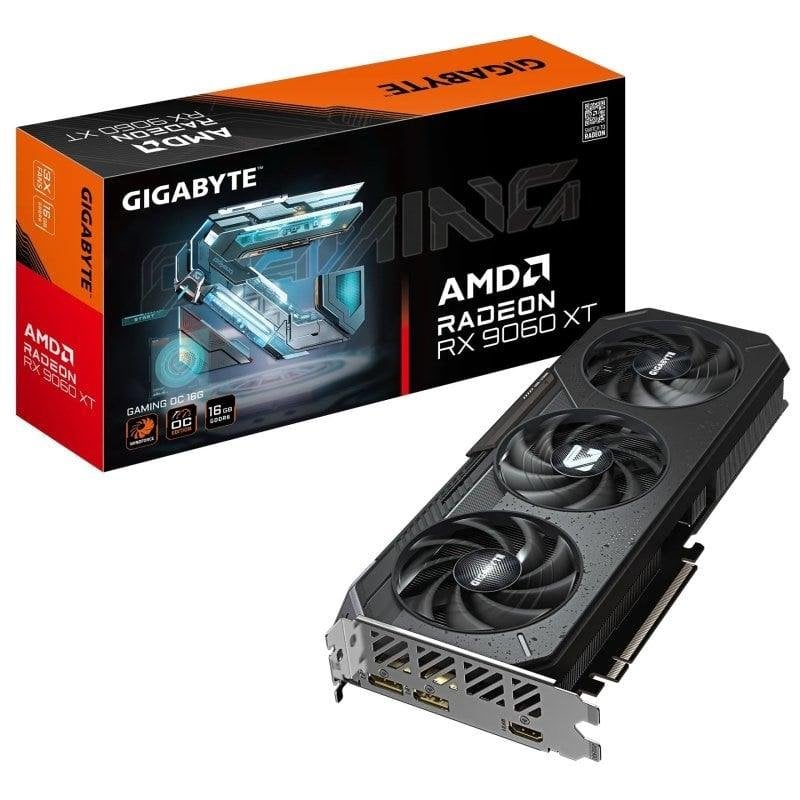
Gigabyte RX 9060 XT GAMING OC 16GB GDDR6 WINDFORCE Black

Gigabyte RX 9060 XT GAMING OC 16GB GDDR6 WINDFORCE Black

399€

(11 Vendors)
Brand: Gigabyte
Good brand
PowerColor RX9060XT Z16G-A 16GB GDDR6 Black

PowerColor RX9060XT Z16G-A 16GB GDDR6 Black

415€

(8 Vendors)
Length: 220
Top brand
XFX SWIFT RX 9060 XT OC 16GB GDDR6 Black

XFX SWIFT RX 9060 XT OC 16GB GDDR6 Black

439€

(10 Vendors)
Length: 290
Good brand
Gigabyte Radeon RX 9060 XT Gaming OC ICE 16GB GDDR6

Gigabyte Radeon RX 9060 XT Gaming OC ICE 16GB GDDR6

399€

(10 Vendors)
Brand: Gigabyte
Good brand
Sapphire Nitro+ RX 9060 XT GAMING OC 16GB Gray

Sapphire Nitro+ RX 9060 XT GAMING OC 16GB Gray

460€

(8 Vendors)
Length: 240
Top brand
ASUS DUAL Radeon RX 9060 XT 16GB GDDR6 White

ASUS DUAL Radeon RX 9060 XT 16GB GDDR6 White

392€

(9 Vendors)
Brand: Asus
Top brand
XFX RX 9060 XT SWIFT OC 16GB GDDR6

XFX RX 9060 XT SWIFT OC 16GB GDDR6

429€

(8 Vendors)
Length: 270
Good brand
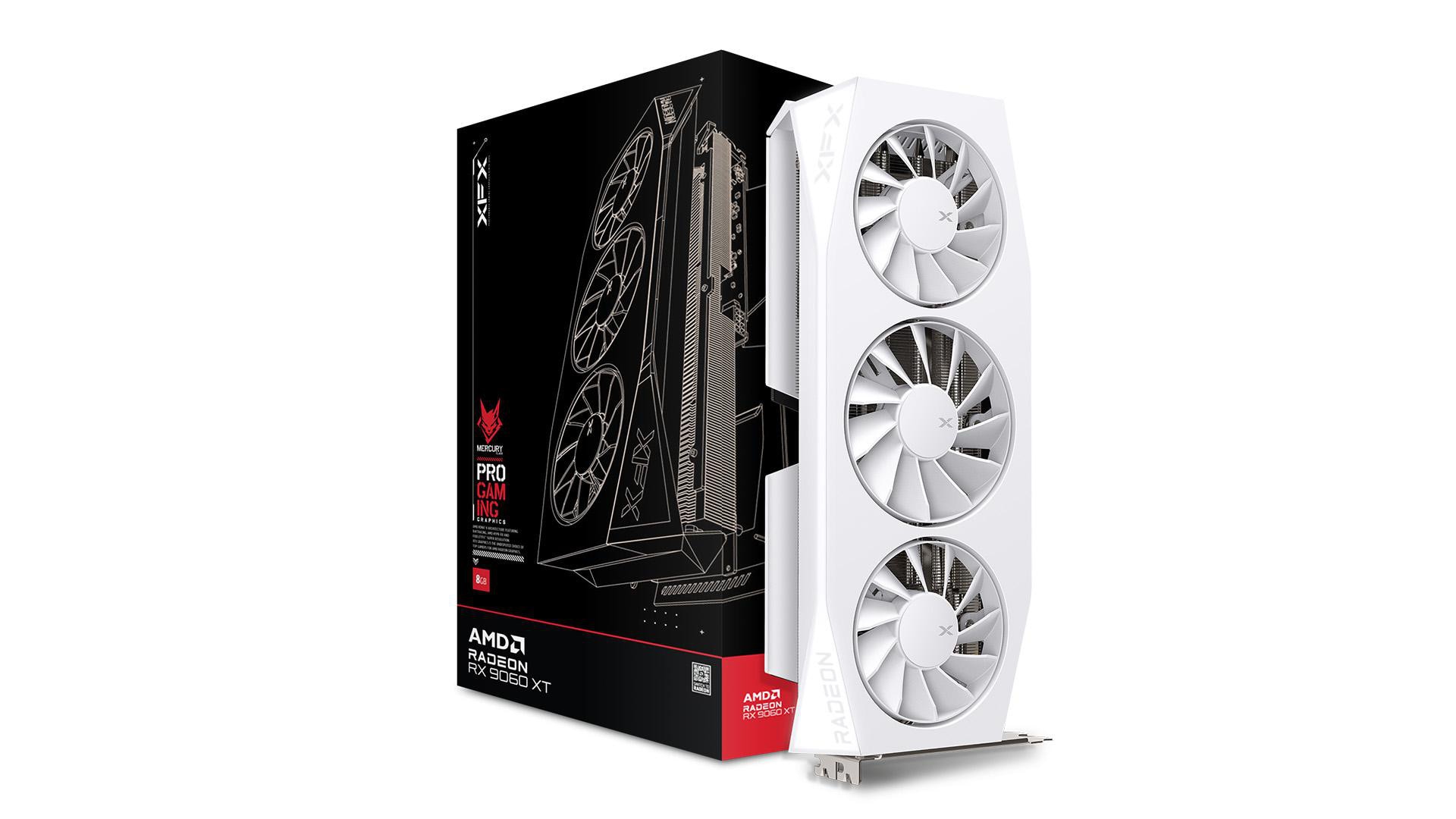
XFX SWIFT RX 9060 XT OC 16GB GDDR6 White

XFX SWIFT RX 9060 XT OC 16GB GDDR6 White

426€

(9 Vendors)
Length: 290
Good brand
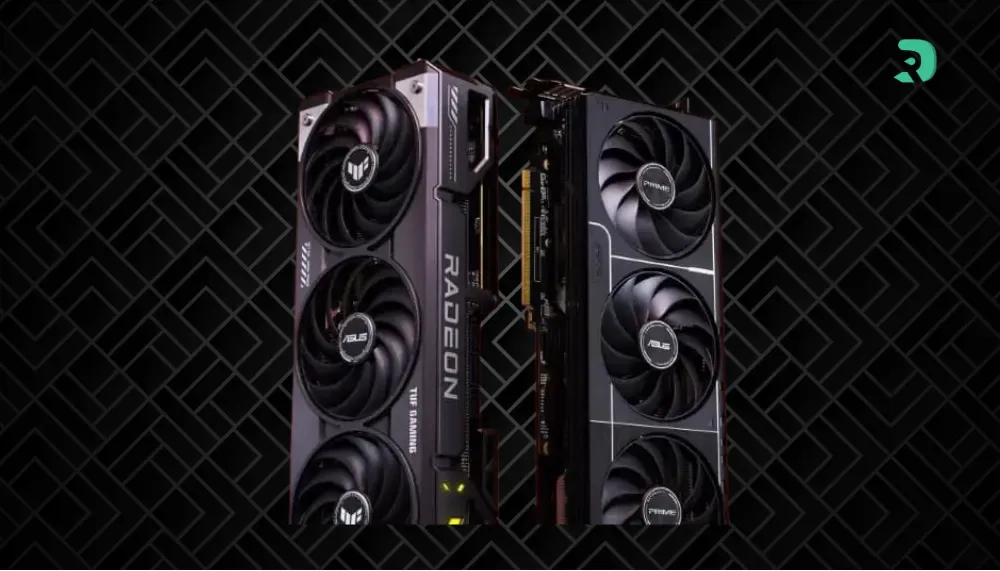
Prime Radeon RX 9060 XT 2.5-slot Triple Fans

Prime Radeon RX 9060 XT 2.5-slot Triple Fans

353€

(6 Vendors)
Length: 304
Top brand
ASRock Radeon 9060 XT 16GB GDDR6 128-bit

ASRock Radeon 9060 XT 16GB GDDR6 128-bit

437€

(12 Vendors)
Length: 298
Good brand
ASUS 90YV0LF1-M0NA00 0dB Dual BIOS

ASUS 90YV0LF1-M0NA00 0dB Dual BIOS

475€

(11 Vendors)
Length: 304
Top brand
Asus Dual Radeon RX9060XT 8GB GDDR6

Asus Dual Radeon RX9060XT 8GB GDDR6

359€

(7 Vendors)
Length: 202
Top brand
Gigabyte Radeon RX 9060 XT GAMING 16GB GDDR6

Gigabyte Radeon RX 9060 XT GAMING 16GB GDDR6

464€

(13 Vendors)
Brand: Gigabyte
Good brand
ASRock RX 9060 XT Challenger 16GB GDDR6 OC

ASRock RX 9060 XT Challenger 16GB GDDR6 OC

399€

(7 Vendors)
Length: 249
Good brand
Sapphire Pulse Radeon RX 9060 XT GAMING OC 8GB GDDR6 Black

Sapphire Pulse Radeon RX 9060 XT GAMING OC 8GB GDDR6 Black

353€

(9 Vendors)
5 (1)
Length: 240
Top brand
XFX RX-96TMERCW9 Mercury OC 16GB GDDR6 White

XFX RX-96TMERCW9 Mercury OC 16GB GDDR6 White

429€

(9 Vendors)
Length: 320
Good brand
ASRock Radeon RX 9060 XT Steel Legend 8GB GDDR6 OC White

ASRock Radeon RX 9060 XT Steel Legend 8GB GDDR6 OC White

427€

(2 Vendors)
Length: 298
Good brand
PowerColor RX9060XT 16GB GDDR6 White OC

PowerColor RX9060XT 16GB GDDR6 White OC

445€

(7 Vendors)
Length: 330
Top brand
XFX RX 9060 XT OC 8GB GDDR6 Black

XFX RX 9060 XT OC 8GB GDDR6 Black

344€

(8 Vendors)
Brand: XFX
Good brand
ASUS Radeon RX 9060 XT 8GB GDDR6 PCIe 5.0 Triple Fans

ASUS Radeon RX 9060 XT 8GB GDDR6 PCIe 5.0 Triple Fans

337€

(5 Vendors)
Brand: Asus
Top brand

Complete technical specifications of the RX 9060 XT

Under the hood, we find the die Navi 44 engraved in TSMC N4P (4 nm). A compact die of 199 mm² — for comparison, the Navi 48 of the 9070 XT is around 350 mm². Less silicon, less consumption, and lower manufacturing cost. Logical for mid-range.

We are on 32 Compute Units , or 2048 Stream Processors. This is half as many as the 9070 XT (64 CU), but the frequencies partly compensate: the boost clock climbs up to 3130 MHz as a reference, and some custom models (Sapphire PULSE OC for example) go up to 3290 MHz. It's high for mid-range.

On the memory side, AMD made the right choice: 16 GB of GDDR6 on a 128-bit bus . Yes, 128-bit seems narrow on paper. But the 32 MB Infinity Cache compensates, and in practice the bandwidth of 322 GB/s is sufficient for 1440p without any worries. AMD also offers an 8 GB version for tight budgets, but in 2026, 8 GB is playing with fire on high-resolution textures.

The TDP is announced at 150 W In practice, tests show a consumption around 140-160 W in games, which is very reasonable. A 550 W power supply is more than enough. This is a real argument against NVIDIA: the RTX 5060 Ti, on the other hand, hits around 180 W.

And then there are the RDNA 4 innovations: 32 Ray Accelerators (one per CU, as usual with AMD), 64 AI Accelerators (the "Matrix Cores" from AMD, for FSR 4 and AI workloads), and support for the DisplayPort 2.1a This last point is important: it allows to power 4K 240 Hz or 1440p 360 Hz screens without compression. Something that even the RTX 4060 Ti cannot do.

Feature RX 9060 XT RX 9070 XT RTX 4060 Ti RTX 5060 (leaks)
Architecture RDNA 4 (Navi 44) RDNA 4 (Navi 48) Ada Lovelace (AD106) Blackwell (GB206)
Engraving TSMC N4P (4 nm) TSMC N4P (4 nm) TSMC N4 (5 nm) TSMC N3 (3 nm)
Unités de calcul / Cœurs 32 Compute Units / 2048 Stream Processors 64 Compute Units / 4096 Stream Processors 4352 CUDA cores ~4608 CUDA cores
Boost Clock 3130 MHz 2970 MHz 2535 MHz ~2600 MHz
VRAM 16 GB GDDR6 128-bit 16 GB GDDR6 256-bit 8 GB GDDR6 128-bit 16 GB GDDR7 128-bit
Bandwidth 322 GB/s 640 GB/s 288 GB/s ~448 GB/s
Cache Infinity / L2 32 MB 64 MB 32 MB L2 36 MB L2
TDP 150 W 250 W 160 W ~180 W
DisplayPort 2.1a 2.1a 1.4a 2.1a
Price FR (May 2026) ~450 euros ~600 euros ~350 euros (used) ~450-500 euros (estimated)
Swipe to view more

Gaming performance: 1080p and 1440p

Let's get down to business. The benchmarks below come from independent tests with a Ryzen 7 9800X3D to eliminate any CPU bottleneck — allowing you to see the true potential of the GPU.

1080p Ultra: the queen of Full HD

In 1080p, the RX 9060 XT is comfortable everywhere. We're talking about 120+ FPS in Black Myth: Wukong, over 200 FPS in CS2 and Valorant, and stable 90-100 FPS in Cyberpunk 2077 with FSR 4 enabled. Even Kingdom Come: Deliverance 2, which is a GPU sinkhole, runs around 85-100 FPS.

The card is clearly oversized for 1080p in most cases. If you have a 1080p 144 Hz screen, you will be above the limit in almost all recent games. This is where it outperforms the RTX 4060 Ti by 15-20% on average.

1440p Ultra: the real playground

1440p is where the 9060 XT shows its limits - and its qualities. In well-optimized titles (Resident Evil Requiem, Crimson Desert, Red Dead Redemption 2), we range between 70 and 90 FPS . Widely playable. In heavier titles like Cyberpunk 2077 in Ultra Ray Tracing, we drop to 55-65 FPS without FSR, which is still decent but not silky smooth.

The real asset here is the 16 GB of VRAM . In 1440p with high-resolution textures (and games in 2026 that are increasingly VRAM-hungry), 8GB is just enough. 16GB, you're good for at least 2-3 years. This is the main weakness of the RTX 4060 Ti - which still comes with only 8GB in the standard version.

4K: not its territory

Let's be clear: the RX 9060 XT is not a 4K card. With 32 CU and a 128-bit bus, you're getting between 35 and 50 FPS in 4K Ultra on most recent AAA games. It's still playable with FSR 4 in Quality mode, but if 4K is your priority, you should rather look at the RX 9070 XT or an RTX 5080.

Game (1440p Ultra) RX 9060 XT RTX 4060 Ti RTX 5060 (estimated) RX 9070 XT
Cyberpunk 2077 60-65 FPS 50-55 FPS 70-75 FPS 95-105 FPS
Black Myth: Wukong 70-80 FPS 55-65 FPS 80-85 FPS 110-120 FPS
Crimson Desert 75-85 FPS 60-70 FPS 80-90 FPS 100-110 FPS
Resident Evil Requiem 75-90 FPS 60-70 FPS 85-95 FPS 110-125 FPS
Kingdom Come 2 60-75 FPS 50-60 FPS 70-80 FPS 90-100 FPS
CS2 / Valorant 200+ FPS 180+ FPS 220+ FPS 300+ FPS
Starfield 55-65 FPS 45-55 FPS 65-70 FPS 85-95 FPS
Swipe to view more

Ray Tracing and FSR 4: the big RDNA 4 project

RDNA 4 improves ray tracing compared to RDNA 3. In practice, the 32 Ray Accelerators do a good job on basic RT effects (reflections, shadows), but as soon as you stack effects — global illumination, path tracing — the card struggles against NVIDIA. It's not new, AMD has always been behind on RT, but the gap is narrowing.

The real novelty is FSR 4 , the new version of AMD's upscaler. This time, it is a model based on AI — like DLSS at NVIDIA — which runs on the 64 AI Accelerators integrated into the die. Gone is the "spatial" FSR that was smudging fine details. FSR 4 uses temporal data and inference to reconstruct the image, and the result is significantly better than FSR 3.

Is it worth DLSS 4? Not yet. NVIDIA is several generations ahead in AI upscaling, and it shows in fine details and temporal stability. But FSR 4 seriously reduces the gap, especially in Quality mode. And unlike DLSS, FSR 4 is compatible with NVIDIA and Intel GPUs (in non-accelerated mode). Well, on AMD GPUs with AI Accelerators, it's obviously faster.

An important point: FSR 4 does not include Frame Generation integrated like DLSS 4 Multi Frame Generation. AMD still offers FSR 3 Frame Gen in parallel, but it's not as seamless as with NVIDIA. If frame generation is a criterion for you, advantage NVIDIA.

Consumption and temperature: sober and discreet

150W of TDP, that's modest for a card of this range in 2026. In practice, custom models range between 140 and 165W depending on the load and OC applied. The Sapphire PULSE, for example, stays below 155W in almost all games — even in 1440p Ultra.

The GPU temperatures remain in the 70-78 °C range with a good ventilated case. The fans are almost silent at 60% load, and do not exceed 35-38 dBA during full gaming. If you are coming from an RX 6600 XT or an RTX 3060, it's an upgrade in terms of noise levels as well.

The performance/watt ratio clearly favors AMD in this segment. At almost equal power consumption with the RTX 4060 Ti (160 W), the 9060 XT is 15-20% faster. The RTX 5060 consumes 180 W for ~10% more performance, but it also costs more. The watt/frame ratio leans in favor of the RX 9060 XT in most rasterization scenarios.

RX 9060 XT vs RTX 5060 vs RTX 4060 Ti: the comparison

The match is tight in this segment. Here's how the three are positioning themselves.

Facing the RTX 4060 Ti: clear victory

The RTX 4060 Ti, that's the card everyone bought in 2024-2025. But in 2026, it's showing its age. 8 GB of VRAM has become insufficient for the high-resolution textures of the latest AAA games. The RX 9060 XT outperforms it by 15-20% in pure rasterization, and the 16 GB of VRAM make a real difference at 1440p. Add in DisplayPort 2.1a and FSR 4 support, and there's really no reason to choose the 4060 Ti at the same price.

Only advantage remaining of the 4060 Ti: the NVIDIA ecosystem (DLSS 3, NVENC for streaming, CUDA for pro apps). If you're a streamer who heavily uses hardware encoder, NVENC remains superior.

Facing the RTX 5060: it depends on the price

The RTX 5060 has not been released yet (expected end of May 2026), but leaks and early benchmarks give an idea. It should be around 8-10% faster in rasterization that the 9060 XT, and significantly ahead in ray tracing thanks to the Blackwell generation RT cores. DLSS 4 with Multi Frame Generation, it's also a real advantage for players who want 4K on a mid-range GPU.

But the RTX 5060 should cost 450-500 euros in France If AMD keeps the price of the 9060 XT around 440-460 euros — which seems to be the case — the value for money leans towards AMD. Especially since 16 GB GDDR6 versus 16 GB GDDR7 doesn't make a colossal difference in gaming.

In summary: RTX 5060 if RT and DLSS 4 are important to you. RX 9060 XT if you want the best price/performance in rasterization and you don't care about advanced ray tracing.

Price and availability in France (May 2026)

The RX 9060 XT 16GB is available from the main French retailers since early May 2026. Here are the prices observed at the time of writing:

  • PowerColor RX 9060 XT 16 GB — 443 euros (best price found, PcComponentes)
  • Sapphire PULSE RX 9060 XT 16GB — 460 euros (PcComponentes, fast shipping)
  • XFX SWIFT OC RX 9060 XT 16GB — 469 euros (PcComponentes)
  • Sapphire NITRO+ RX 9060 XT 16GB OC — 509 euros (premium version)

The range is therefore between 440 and 510 euros according to the model. For the 8 GB version (not recommended in 2026), expect around 50-70 euros less. As for availability, the stock is currently good - no shortage like we saw with the 9070 XT at their launch.

A piece of advice: the PowerColor at 443 euros and the Sapphire PULSE at 460 euros offer the best value for money. The NITRO+ at 509 euros is mainly for factory OC and a quieter cooler - not essential on a card that already consumes little.

The best custom models RX 9060 XT

Sapphire PULSE RX 9060 XT 16 GB: the choice on

Sapphire, it's the safe bet on AMD cards for years. The PULSE is compact (240 mm), silent, and the factory OC pushes the boost to 3290 MHz. The Dual-X cooler does the job well without turning your PC into a wind tunnel. At 460 euros, it's probably the best compromise on the market.

ASUS Dual RX 9060 XT 16GB: compact and efficient

ASUS offers its Dual version with a sober design, two fans, and a compact format that fits in most mATX cases. No aggressive OC, but contained temperatures and a reasonable price. A good choice if you have a small case.

XFX SWIFT OC RX 9060 XT 16GB: the outsider

XFX is back in force on RDNA 4 with a well-finished model and an interesting factory OC. The design is sober (for once at XFX), and the feedback on the cooling is positive. At 469 euros, it is a step above the PowerColor in finish, but not far from the Sapphire in performance.

Who is the RX 9060 XT for?

The question always comes back: who is it for, concretely? Here is our reading grid.

You should buy the RX 9060 XT if...

  • Are you playing in 1080p or 1440p and want something solid without breaking the bank
  • You are coming from an RX 6600/6700 XT, RTX 3060 or RTX 4060 and you want a real upgrade
  • You want 16 GB of VRAM to be comfortable for 2-3 years
  • The power consumption is a criterion (150 W, no need to change your power supply)
  • You don't need advanced ray tracing or DLSS 4

You should skip your turn if...

  • You play in 4K — look at the RX 9070 XT or RTX 5080
  • Ray tracing is essential — the RTX 5060 will be better
  • You stream a lot — NVENC remains superior to AMD's VCE
  • You can wait until the end of May and see the prices of the RTX 5060.

Our verdict

The RX 9060 XT is exactly what we expected from AMD in the mid-range: an efficient card, well-equipped with VRAM, energy-efficient, and sold at a price that remains reasonable. RDNA 4 brings a real improvement in ray tracing and the AI-based FSR 4 fills some of the gap with NVIDIA.

She doesn't beat the future RTX 5060 across the board — NVIDIA keeps the advantage in RT and software features (DLSS 4, NVENC). But in pure rasterization at this price, the 9060 XT is hard to beat. And the 16GB of VRAM, in 2026, is a massive argument against NVIDIA cards that have long overlooked memory quantity in the mid-range.

If you're building a gaming PC around 1000-1200 euros and aiming for 1080p/1440p, the RX 9060 XT clearly deserves your shortlist. It's the people's GPU in 2026, and it does the job very well.

FAQ

Is the RX 9060 XT worth it compared to the RTX 4060 Ti in 2026?

Yes, clearly. The 9060 XT is 15-20% faster in rasterization, offers double the VRAM (16GB vs 8GB), supports DisplayPort 2.1a, and consumes barely more. The only advantage of the 4060 Ti remains NVENC and the CUDA ecosystem if you do video editing or 3D.

Should I get the 8GB or 16GB version of the RX 9060 XT?

16 GB, without hesitation. The price difference is 50-70 euros, and in 2026 several AAA games already exceed 8 GB of VRAM usage in 1440p. Choosing the 8 GB version is saving in the short term to struggle in the medium term. Bad calculation.

What power supply for the RX 9060 XT?

A 550 W 80+ Bronze power supply is more than enough for a build with a Ryzen 5 7600X or a Core i5. If you want some headroom for a future CPU upgrade, go for 650 W. No need to oversize.

Is the RX 9060 XT good for streaming?

It depends. AMD's VCE (Video Encoder) has improved with RDNA 4, and for streaming in 1080p 60 FPS on Twitch, it's perfectly fine. But if you want 1440p 60 FPS or if you do a lot of local recording, NVENC on NVIDIA cards remains superior in quality and performance impact.

When will the RTX 5060 be released and should we wait?

The RTX 5060 is expected at the end of May 2026, probably around May 20-25. If you're not in a hurry, waiting 2-3 weeks to see the prices and real tests is a reasonable strategy. But if the 9060 XT is available at 440-460 euros and the 5060 arrives at 500+ euros, the 10% performance difference may not necessarily justify the price difference.