yuux
Co-founder of DropReference, I'm here to give you the best tips to build the gaming PC of your dreams!
yuux
Co-founder of DropReference, I'm here to give you the best tips to build the gaming PC of your dreams!
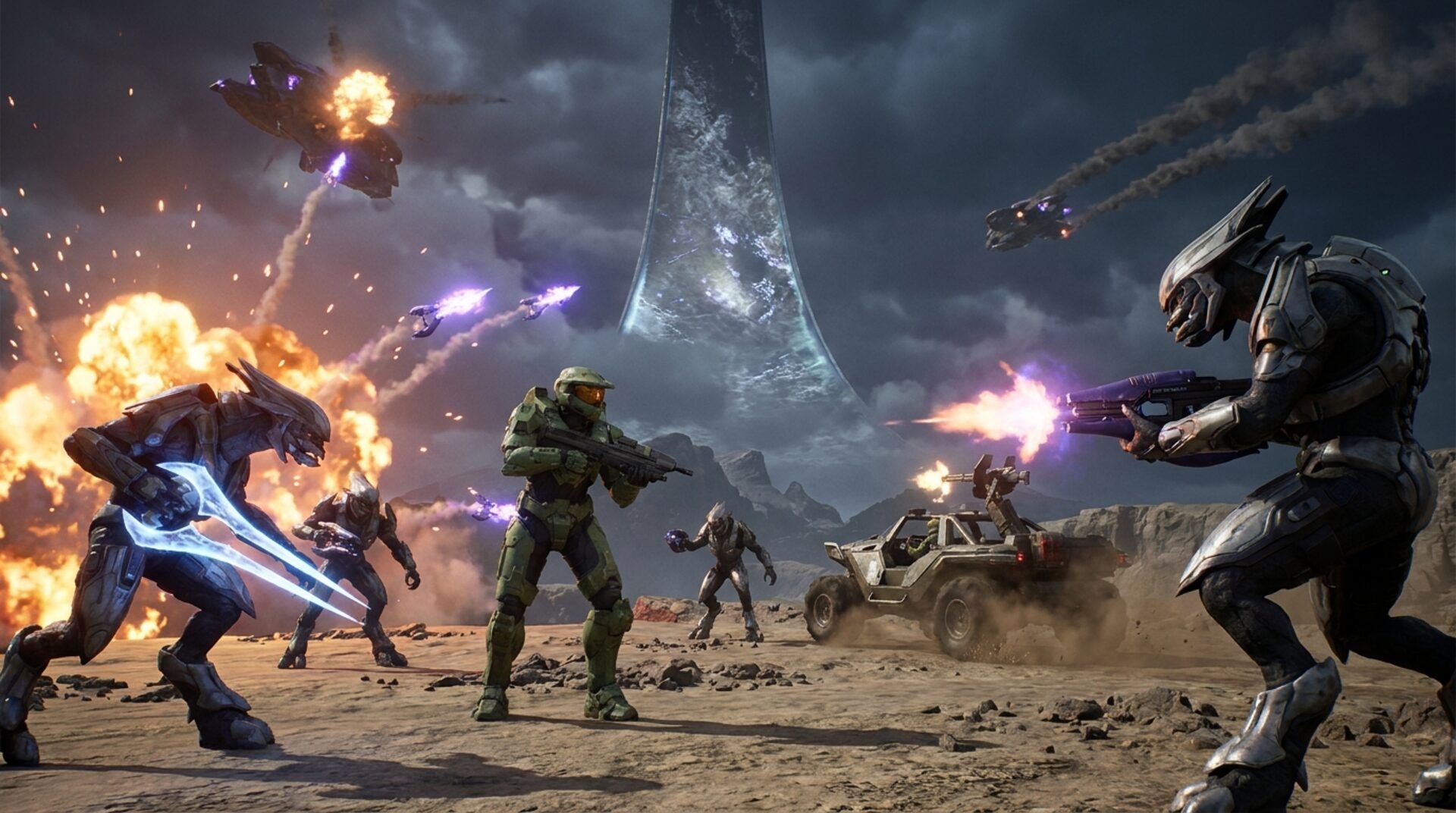
Master Chief is back under Unreal Engine 5. We revisited the campaign of Halo CE version 2026: visuals, gameplay, co-op, bonus missions. Full verdict.
On July 28, 2026, Microsoft released Halo: Campaign Evolved A complete remake of the Halo: Combat Evolved campaign in Unreal Engine 5, developed by the brand new Halo Studios (formerly 343 Industries). 25 years after the original release on the first Xbox, Master Chief sets foot on the Halo ring again — and this time, even PlayStation players can join in. Yes, you read that right.
The game is available on Xbox Series X|S, PS5 and PC (Steam) from $49.99 (€59.99 in Europe). A Premium Edition also exists, with armor skins, a digital artbook, and a Halo short story. We thoroughly played through the campaign. Here's what we think.
This is the big promise of the remake: redo everything in Unreal Engine 5. And when it works, it works really well. The exteriors are stunning. The first time you set foot on the Halo ring in the second mission, with the curvature of the ring rising into the sky, the lush forests, the sunlight shining through the trees — it's beautiful. The beach of the Silent Cartographer is probably the moment when the game shines the most. The night scenes in the rain with fire, that's also where you see the artistic direction at its best.
But as soon as you enter the interiors, it falls back. The corridors of the Forerunner installations remain cold, empty, repetitive. Exactly like in 2001 — except now, it's a deliberate choice. We understand the logic of fidelity to the original game, but as a result, you go from sumptuous outdoor environments to basements that give the impression of being done last. If you're not used to Halo, you might even get lost in some corridors because they all look alike.
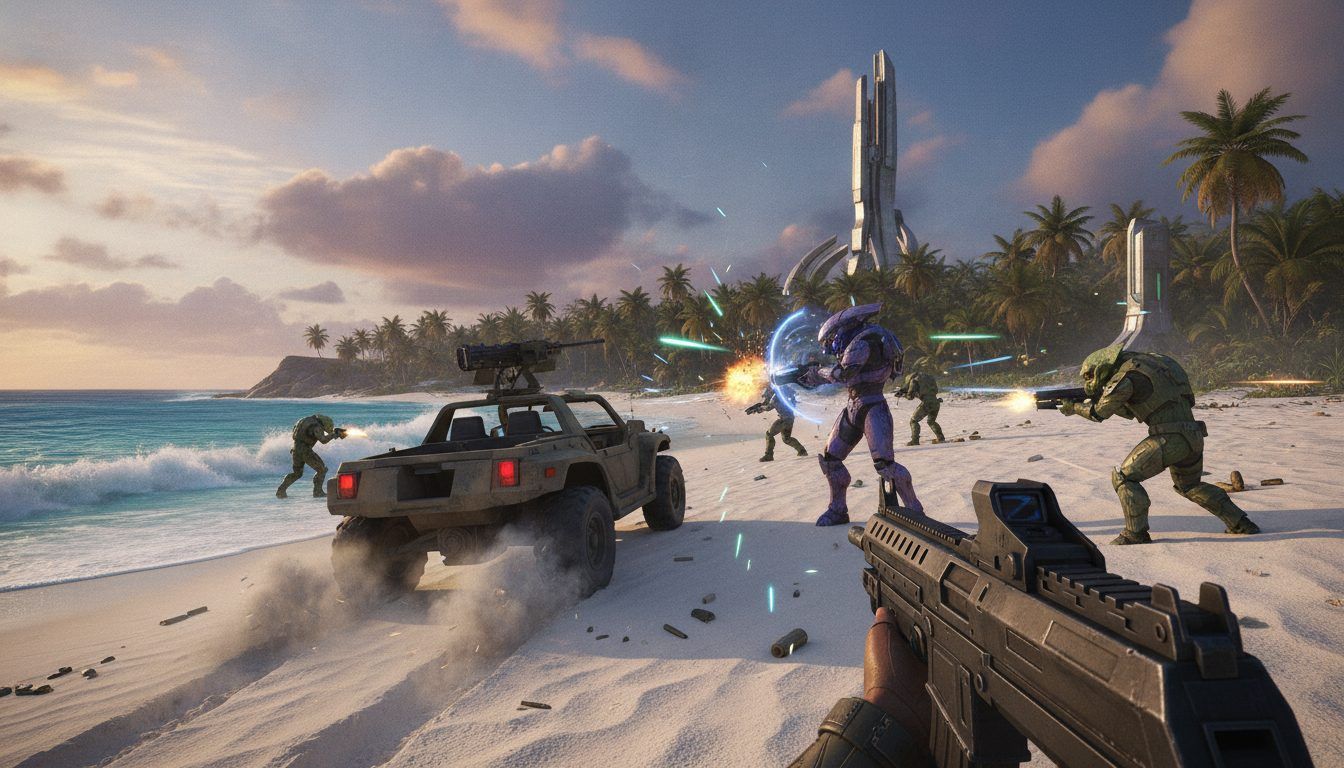 Click to enlarge
A nice clearing arrives when the Flood is coming . Interiors become significantly more interesting with organic details, well-managed shadow play. This is where the graphic engine finally shows its muscles indoors. The snowy outdoor sections, on the other hand, do not have the same wow effect as the tropical areas. It's beautiful, yes, but it lacks that "wow, look at that" factor we have on the beach.
In terms of performance, it's a bit of a downside. On Xbox Series X, frame rate drops occur in big combat scenes towards the end - when there are explosions everywhere, masses of enemies, vehicles. For a remake of a 2001 game, it's not great. It's not gamebreaking, it doesn't prevent you from playing, but it's noticeable enough to mention. The cutscenes also have some stutters here and there. Hopefully, a quick patch is expected.
Where the remake really delivers is in the gameplay. The shooting is still as good. Sticking a plasma grenade on a panicking Elite, lining up a headshot with the sniper, emptying a magazine of assault rifle on a group of Grunts — it remains enjoyable in 2026. The haptic vibration of the controller adds a significant little extra, it gives weight to each weapon.
Small downside on the sound, however. Some weapons sound... differently. The sniper, the magnum, the Warthog — sounds that were iconic in 2001 — have been retouched. It's not bad, but it's more generic, softer. Less memorable. Fans of the original game will notice, for sure.
The Warthog is still as floaty to drive, and frankly, that's part of the charm. If you're new, welcome: this vehicle drives like a supermarket cart on an ice rink. But we love it like that. Tip: use camera-based driving, not the acceleration trigger. It works better.
The big news is the addition of 9 weapons from other Halo games . The SMG, the long-range Needle Rifle, the Energy Sword — weapons introduced in Halo 2, 3, or Reach that naturally fit into CE's gameplay. You can also carjack enemy vehicles (thank you, Halo 2) and drive the Wraith for the first time in CE. It seems obvious once it's there, but it really changes the experience.
Beyond the pure remake, Halo Studios has created three new missions who serve as a prequel. Operation Meteorite takes place one year before the events of Halo CE, with Master Chief and Sergeant Johnson working together against the Covenant. No Flood, no Forerunner, just the Human vs Covenant war. And it's refreshing.
The missions are surprisingly consistent. We're not talking about two corridors and three enemies - it's real content, with new looks for some enemies, Brutes coming in, specific weapon skins. The intro has a rather cool Star Wars vibe. The flight mission leaves something to be desired (like all flight missions in Halo, let's be honest), but overall it's solid. We would have taken two more without complaining.
Something that will get people talking: Master Chief speaks more . Much more. In the original game, the Chief was almost silent. Here, he comments, reacts, discusses with Johnson and Cortana. It's a choice that will divide. Personally, it takes a moment to get used to, but it works.
The whole campaign is played out in online co-op for up to 4 players with crossplay Xbox/PS5/PC and cross-progression. We did a good part of the campaign in coop on Heroic — which is actually tougher than we remembered. The enemy AI does some weird stuff from time to time: Elites staring at you without moving, Hunters with random behavior, Covenant vehicles getting stuck in the scenery. Nothing dramatic, but it's there.
In terms of replayability, the game goes all out. Campaign Remix mode redistributes enemies and weapons in the levels — it completely changes the tactical approach. And there is more than 30 Skulls to find, some classics (Grunt Birthday Party, obviously), others unpublished. The third person skull is a real good surprise — playing Halo CE in TPS view, it gives a completely different angle. Beware, the skulls are hidden in vicious corners. With the level of detail of the UE5 environments, you pass by without seeing them.
The cutscenes have been entirely redone, all the dubbing re-recorded. The actors' performances are correct without being memorable - the original had something extra, a charming naivety that is a bit lacking here. Cortana is no longer green, she's turning orange. A small detail, but fans will remember it. Overall, the new cinematics are well done, well framed, with some slightly cheesy moments but nothing serious.
| Halo: Campaign Evolved | |
|---|---|
| Developer | Halo Studios (formerly 343 Industries) |
| Engine | Unreal Engine 5 |
| Release Date | July 28, 2026 |
| Platforms | Xbox Series X|S, PS5, PC (Steam) |
| Price | 49.99$ / 59.99€ (Standard) — Premium available |
| Original campaign | 10 remastered missions + redesigned level design |
| Bonus content | 3 new missions (Operation Meteorite) |
| Co-op | Up to 4 players online, crossplay, cross-progression |
| Added weapons | 9 classic weapons from Halo 2/3/Reach |
| Crânes | 30+ including 3rd person mode and Campaign Remix |
Halo Campaign Evolved, it's a good remake. Not the remake of the century, not the definitive overhaul that some were hoping for, but a solid product that does the job. The exteriors under UE5 are beautiful, the gameplay still holds up 25 years later, and the additions — new weapons, bonus missions, skulls, 4-player co-op — bring enough new to justify a return to the ring.
The weaknesses are there: flat interiors, performance issues on big scenes, less iconic weapon sounds, an AI that does whatever at times. Halo 1 purists will find things to criticize. It's inevitable when you mess with such an iconic game.
To 50 bucks , it depends on your profile. If you've never played Halo — especially if you're on PlayStation where it's happening for the first time — it's an excellent entry point. If you're a fan who has already completed the game 15 times, it's a good excuse to dive back in with a fresh coat. And if you're in between, waiting for a discount at 30-35€ would be reasonable.
Yes, this is the first time a Halo game is released on PlayStation. The game runs on PS5 with full crossplay and cross-progression.
No. Halo Campaign Evolved is only the solo/co-op campaign. The multiplayer remains on Halo Infinite, which is free-to-play.
If you want the UE5 visuals, the 3 bonus missions, and the 4-player co-op, yes. Otherwise, the MCC remains an excellent way to play Halo CE. The basic gameplay is the same.
No, the game is not included in the Game Pass at launch. It must be purchased separately for $49.99 / €59.99.
The main campaign lasts about 8 to 10 hours on Heroic. The 3 bonus missions add 2 to 3 hours. With the skulls, Remix mode, and higher difficulties, easily expect 25+ hours to see everything.