AMD in the red on gaming: -31% revenue, and Lisa Su says not a word

AMD gaming AMD financial results RDNA 4

The Q2 2026 results of AMD are out: gaming drops by 31% to 779 million while the datacenter skyrockets to 6.7 billion. Lisa Su doesn't even mention the word gaming.

Author
Reborn
Co-founder of DropReference, passionate about video games since I was a child, I try to help you play your favorite games in good conditions!!

11.5 billion in revenue, but gaming is suffering

779 million dollars. That's what gaming brought in for AMD in the second quarter of 2026.

One year earlier, this figure was close to 1.13 billion. Do the math: -31% in twelve months . Meanwhile, the datacenter - meaning AI - exploded to 6.7 billion, up +107% over the same period. The message is clear: at AMD, gaming is no longer the priority. And the numbers don't lie.

The Q2 2026 results were released on the evening of August 4th. Behind the record figures — 11.5 billion total revenue, +50% compared to 2025 —, there's a reality that bothers you as a player. Let's dissect it.

Category Q2 2026 Revenue YoY Growth Revenue Share
Data Center (AI) $6.7 billion +107% 58%
Client (Ryzen) $3.1 billion +23% 27%
Embedded $977 million +19% 8%
Jeu vidéo $779 million -31% 7%
Swipe to view more

Semi-custom and Radeon: the double penalty

The -31%, it doesn't come out of nowhere. AMD says it straight in its report: lower semi-custom revenue Translation: PS5 and Xbox chips are less profitable than before.

Normal. The PS5 is 6 years old, the Xbox Series as well. We are at the end of the console cycle. Sony released the PS5 Pro, but it remains the same basic architecture. Volumes are decreasing mechanically - nothing surprising about that.

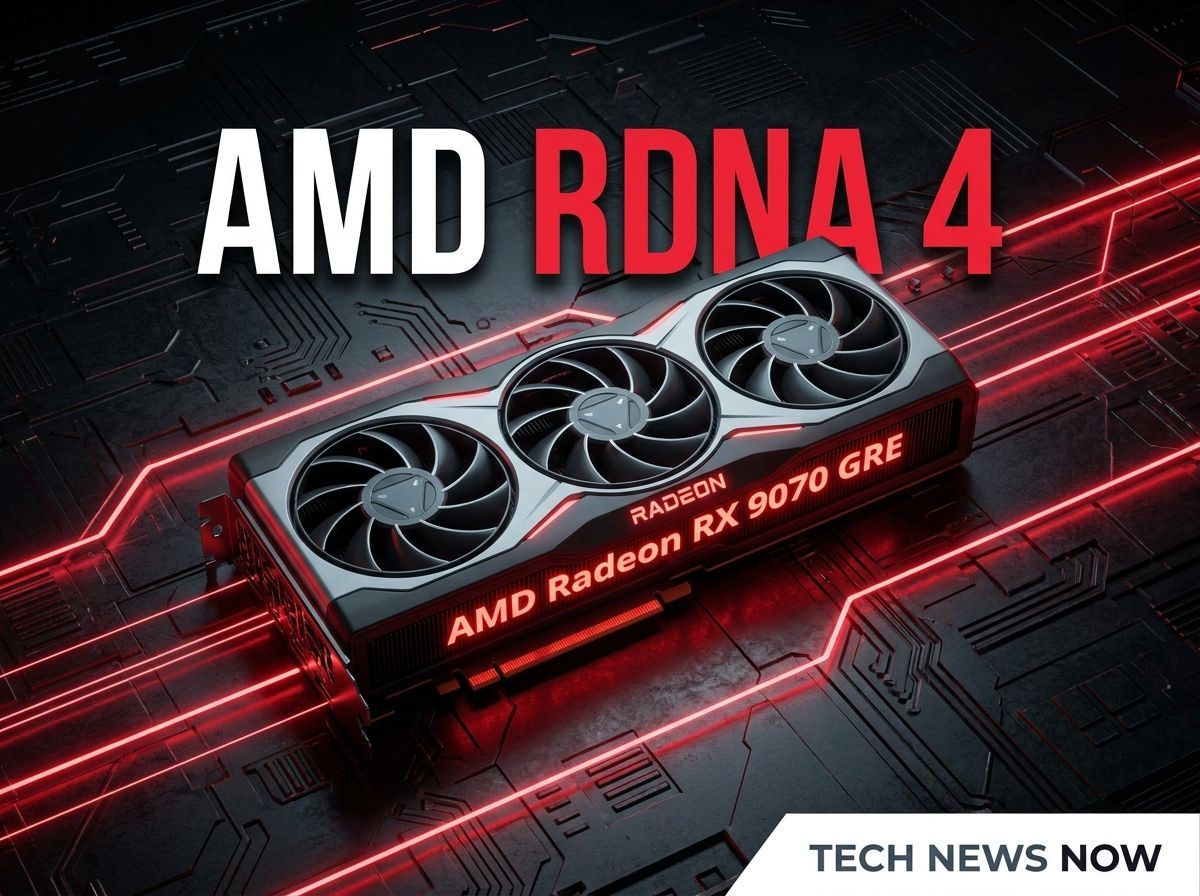
But it would be too easy to put everything on the consoles' shoulders. On the PC GPU side, RDNA 4 also did not set the world on fire. AMD released the RX 9070 XT and the RX 9070 in March - two decent mid-range cards, nothing to complain about. Except that there is still no high-end AMD GPU to compete with Nvidia's RTX 5080 or 5090. The RX 9060 XT has just landed, with this 4GB VRAM config that is still controversial. Not exactly a sign of aggression.

And the result is seen in the numbers: 779 million for gaming in one quarter, that's 7% of the total turnover . Seven percent. For a company that has built itself on gaming and consumer CPUs. That's where we're at.

Lisa Su doesn't even say the word gaming

There, it's almost the most telling. Read the two official quotes from the AMD press release.

"We delivered an excellent quarter, with record revenue and profitability as Data Center revenue more than doubled year-over-year. We enter the second half with strong momentum as EPYC demand accelerates, Instinct deployments scale and Helios begins to ramp." — Lisa Su, CEO AMD

"Revenue increased 50% year-over-year to a record $11.5 billion, driven by continued strength in our Data Center business, which represented 58% of company revenue." — Jean Hu, CFO AMD

Did you notice? Not a word about gaming. Neither Lisa Su nor Jean Hu mention Radeon GPUs, consoles, or anything related to video games. The press release is 3 pages long on AI partnerships — Anthropic, Microsoft, Helios racks — and exactly 12 words on gaming: Gaming business revenue was $779 million, down 31% year-over-year.

When a company's CEO doesn't mention a segment that is down by 31%, it's not an oversight. It's a strategic choice.

The AI datacenter, AMD's cash machine

To understand why gaming is relegated to the closet, look at the Data Center column. 6.7 billion dollars in one quarter , +107% over one year. It's more than half of AMD's revenue. With EPYC selling like hotcakes on the server side, and Instinct MI450X flying off the shelves to power AI models, the datacenter now represents 58% of AMD's business.

And it's going to accelerate even more. AMD forecasts around 13 billion in revenue for Q3, up +41% from last year. CFO Jean Hu talks about "acceleration of datacenter sales" in the second half. Translation: even more Instinct, even more Helios, and probably even less R&D bandwidth for Radeon.

The partnership with Anthropic speaks for itself: up to 2 gigawatts of GPU Instinct MI450X in Helios racks. Two gigawatts. That's billions of dollars worth of hardware. Compared to that, selling an RX 9070 XT for 599 bucks... you see the problem.

What does this change concretely for you

The burning question: Will AMD drop PC gaming? Officially, no. RDNA 4 exists, the AM5 socket is extended until 2029, and the RX 9070 XT remains a good choice for 1440p. But in reality, the signals are not great.

  • No high-end GPU planned — AMD has clearly abandoned the $800+ segment to Nvidia. No RX 9080, no RX 9090. If you want 4K ultra, it's Team Green or nothing.
  • The R&D budget goes to AI — the Instinct MI455X, the Helios racks, the Anthropic partnerships at 2 GW... That's where the billions go. Every dollar invested in AI datacenter is a dollar that doesn't go into a gaming GPU.
  • The consoles will slow down again — no PS6 before 2028 at the earliest, and even then there is no guarantee that AMD will win the contract. The semi-custom will continue to slip.
  • FSR 4 limited to RX 9000 — AMD's ML upscaling, its argument against DLSS 4, only runs on RDNA 4. No backward compatibility with older cards.

The positive thing — because one is needed — is that Ryzen is doing very well. +23% on the client side, that's solid. AMD still dominates the CPU gaming field. And the RX 9070/XT, even without performing miracles, maintain a healthy pressure on Nvidia prices. Without AMD in the picture, the RTX 5070 would probably be at 700 bucks instead of 549.

AMD is following the same path as Nvidia

The parallel is striking. Nvidia also practically ignored gaming in 2026 — zero new consumer GPUs announced this year. Jensen Huang talks about "trillions of dollars of AI infrastructure," not frames per second in Cyberpunk 2077.

The two GPU giants are converging on the same finding: AI pays off 10 times more than gaming Why spend R&D on a $600 GPU when an Instinct MI455X at $40,000 is sold on a waiting list? It's mathematical.

For gamers, it's a bad structural news. Less competition at the top means higher prices, less innovation in real-time rendering, and GPU release cycles that stretch. We went from annual Pascal-Turing-Ampere rhythms to 18-24 month gaps. And it's not likely to improve.

Indicator Q3 2026 (AMD forecast)
Total revenue ~13 billion dollars (+41% YoY)
Non-GAAP Gross Margin ~56%
Main engine Data Center (H2 acceleration)
Swipe to view more

FAQ

Is AMD going to stop making gaming GPUs?

No, not in the short term. RDNA 4 was released this year and the RX 9070 XT is selling well. But don't expect a high-end AMD GPU before RDNA 5 at the earliest — and even then, nothing is guaranteed. High-end belongs to Nvidia.

Does -31% mean that fewer people are playing?

Not at all. The decline mainly comes from the semi-custom PS5 and Xbox chips at the end of their cycle. PC gaming is only a part of this figure, and the global PC gaming market remains rather stable or even slightly increasing.

What is Helios, which Lisa Su talks about all the time?

This is AMD's complete rack solution — servers packed with Instinct MI455X GPUs designed to train and run AI models. Anthropic, OpenAI, Microsoft, and Meta are buying them. This is where the billions are going.

Should you still buy an RX 9070 XT?

Yes, it remains an excellent choice in 1440p. The fact that AMD is investing less in high-end gaming does not change the performance of the 9070 XT. At $599, it is competitive against the RTX 5070, with 16GB of VRAM as a bonus.

When are the next AMD results due?

Q3 2026 will be released at the end of October or beginning of November. AMD already announces 13 billion in expected revenue — even more from datacenter, and probably even less from gaming in proportion.

779 million out of 11.5 billion. Gaming represents 7% of AMD's business in 2026. That's the reality. AMD is not going to abandon gamers overnight, but the era when gaming was at the heart of the strategy is over. AI has won the budget arbitration, quarter after quarter. For gamers, hope lies in the mid-range competition - where AMD remains relevant - and in a hypothetical RDNA 5 that would bring back some ambition at the top. In the meantime, at AMD as well as at Nvidia, gaming has become a side business.