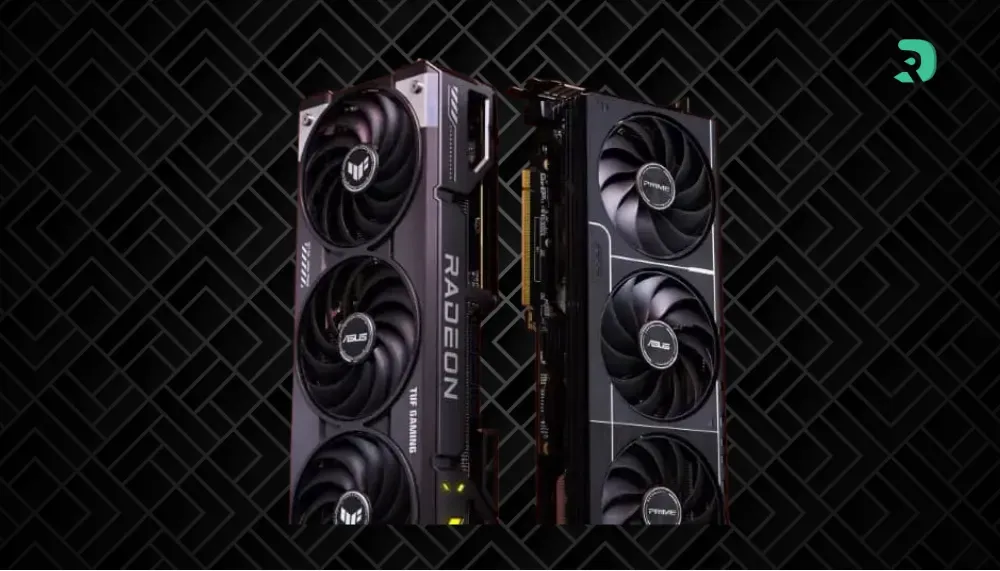
Which CPU for an RX 9070 XT in 2026? Ryzen 5 9600X, 7800X3D or 9800X3D by resolution (1080p, 1440p, 4K)

Which CPU should you pair with an RX 9070 XT in 2026? Ryzen 5 9600X at 1440p and 4K, 7800X3D or 9800X3D at high-refresh 1080p, the AM4 case, and what we actually know about Zen 6 after Level1Techs’ server first look.

The short answer: which CPU for your RX 9070 XT?

The RX 9070 XT is a 16 GB GDDR6 card built for 1440p and capable at 4K. In most games, especially from 1440p with high settings, the card is the limit, not the processor. The right CPU therefore depends first on your resolution and refresh rate, not on a “fastest chip” ranking.

In short: for a new PC at 1440p or 4K, a Ryzen 5 9600X is enough in the vast majority of cases. At 1080p at 144 Hz and above, or in very CPU-heavy games, step up to a Ryzen 7 7800X3D. The Ryzen 7 9800X3D only opens a real gap when the processor is truly the limiter: keep it for high-refresh competitive play, or if you plan to reuse this CPU with a faster card later.

This guide focuses on pairing with an RX 9070 XT. For the NVIDIA side, see our guides on which CPU for an RTX 5070 or 5070 Ti and which CPU for an RTX 5060. For a general ranking, our best gaming CPU guide.

Your situation Recommended CPU Alternative Why
New PC, 1440p 144 to 180 Hz Ryzen 5 9600X Ryzen 5 7600X The card already limits most AAA games: a 6-core Zen 5 on AM5 is enough
New PC, 4K or 1440p with FSR / heavy RT Ryzen 5 9600X Ryzen 5 7600X The GPU remains the limiting factor, so the CPU matters even less
New PC, 1080p 144 Hz and up, or very CPU-heavy games Ryzen 7 7800X3D Ryzen 7 9800X3D 3D V-Cache helps when the processor has to feed the card at a high frame rate
New PC, you want the maximum and to keep the CPU longer Ryzen 7 9800X3D Ryzen 7 7800X3D The fastest current X3D, but the gap shrinks once the 9070 XT hits its ceiling
New PC, gaming plus creative work (editing, rendering) Ryzen 7 9700X Core Ultra 7 265K 8 Zen 5 cores at 65 W, or 20 Intel cores if you prioritize multithread work
AM4 PC already on a 5700X3D or 5800X3D Keep your CPU Move to AM5 later At 1440p, AM4 3D V-Cache is still a strong partner; AM5 is mainly worth it for high-refresh 1080p
AM4 PC with a Ryzen 5 5600 / 5600X Keep it for 1440p AAA 5700X3D, or AM5 for competitive 1080p Often enough when the GPU is the limit; tighter in very CPU-heavy games
Swipe to view more

How the RX 9070 XT actually loads the processor

The RX 9070 XT ships with 16 GB of GDDR6 on a 256-bit bus, and 64 compute units of RDNA 4. AMD quotes a typical board power (TBP) of 304 W and recommends a PSU of at least 750 W. This is not an entry-level card: at 1080p it can produce enough frames for the CPU to become the bottleneck, especially at 144 or 240 Hz. At 1440p and 4K, the graphics load rises and the gap between processors tightens.

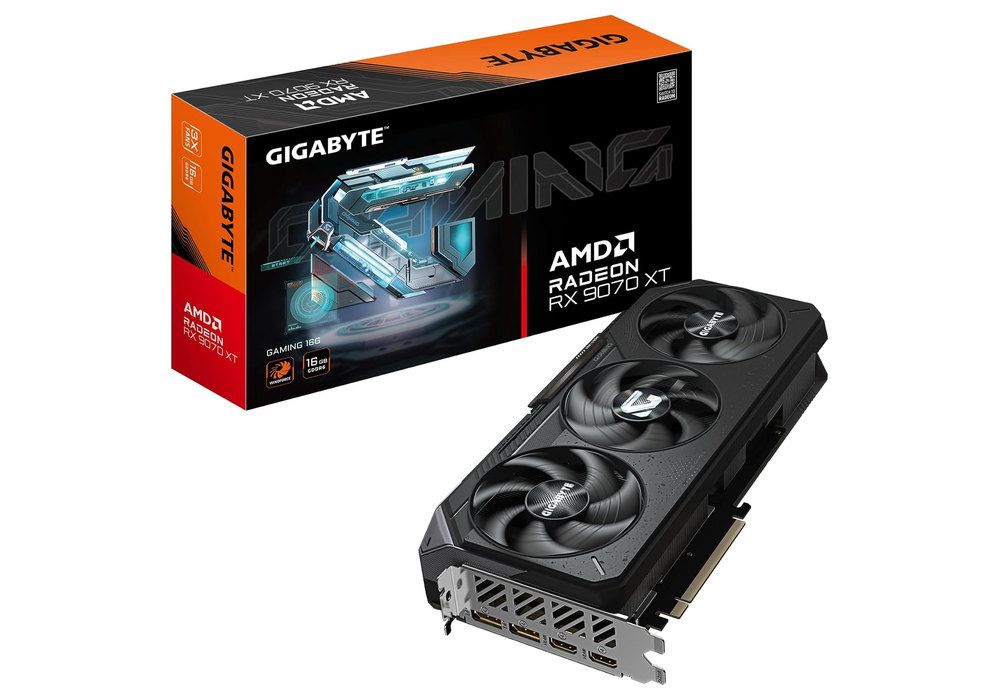
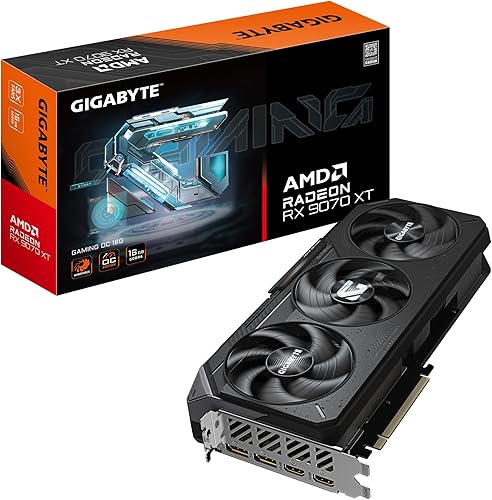
Carte graphique GIGABYTE Radeon RX 9070 XT GAMING 16G et sa boîte Click to enlarge

Hardware Canucks compared an RX 9070 XT with a wide range of processors, at 1440p and maximum settings. In games such as Alan Wake 2 or Black Myth: Wukong, the card already hits its ceiling: a slightly older CPU then delivers roughly the same frames as a current model. By contrast, Baldur’s Gate 3 remains CPU-limited even in those conditions: a Ryzen 5 5600X, a Ryzen 5 3600X or a Core i5-9600K leave performance on the table, and a modern CPU — the Ryzen 7 9800X3D first among them — takes the lead again.

Two useful caveats. First, if you enable FSR, the internal render resolution drops: the GPU works less, and the processor can become the limiter again, especially at 1080p or in Performance mode. Second, on an AMD platform, Smart Access Memory (and Resizable BAR on Intel) is enabled in the BIOS; the gain depends on the game, so we do not put a figure on it here.

1440p and 4K: the Ryzen 5 9600X is the most reasonable choice

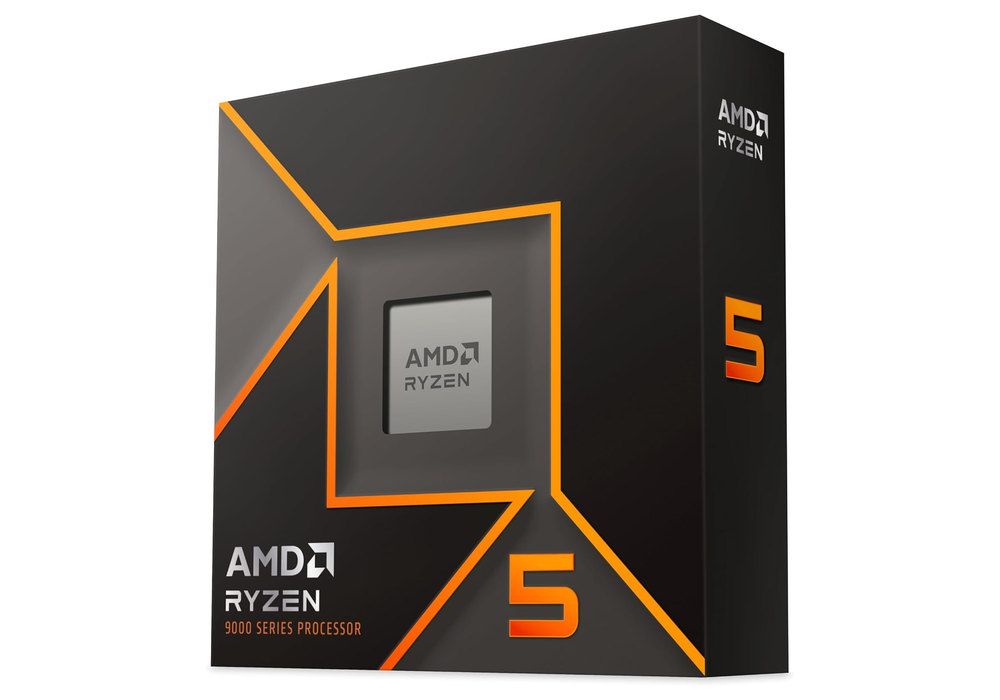
This is the resolution the RX 9070 XT is built for. At 1440p, and even more at 4K, the card limits most AAA games at high settings. A Ryzen 5 9600X — 6 cores / 12 threads of Zen 5, boost up to 5.4 GHz, 65 W TDP, AM5 socket — is enough to drive it. You get a platform that can still take later Ryzen chips, and you keep budget for the monitor, the RAM or the PSU.

Boîte du processeur AMD Ryzen 5 9600X, série Ryzen 9000, socket AM5 Click to enlarge

The 7800X3D still has a role at 1440p if you mainly play very CPU-heavy titles: simulations, strategy, large MMOs, Baldur’s Gate 3, Space Marine 2, or online games where 1% lows matter as much as the average. In native 4K, the gap between a 9600X and an X3D becomes very small in practice, because the card hits its limit sooner.

AMD Ryzen 5 9600X

6 cores / 12 threads of Zen 5 on AM5, boost up to 5.4 GHz, 65 W, 32 MB of L3 cache. The most balanced 6-core for an RX 9070 XT at 1440p and 4K.

Pros
  • Enough at 1440p and 4K in most games
  • 65 W, easy to cool
  • Upgradeable AM5 platform
Cons
  • Less comfortable than the X3D chips at high-refresh 1080p
  • Cooler sold separately
FranceCheck the price in my country

High-refresh 1080p: 7800X3D, or 9800X3D if you want the maximum

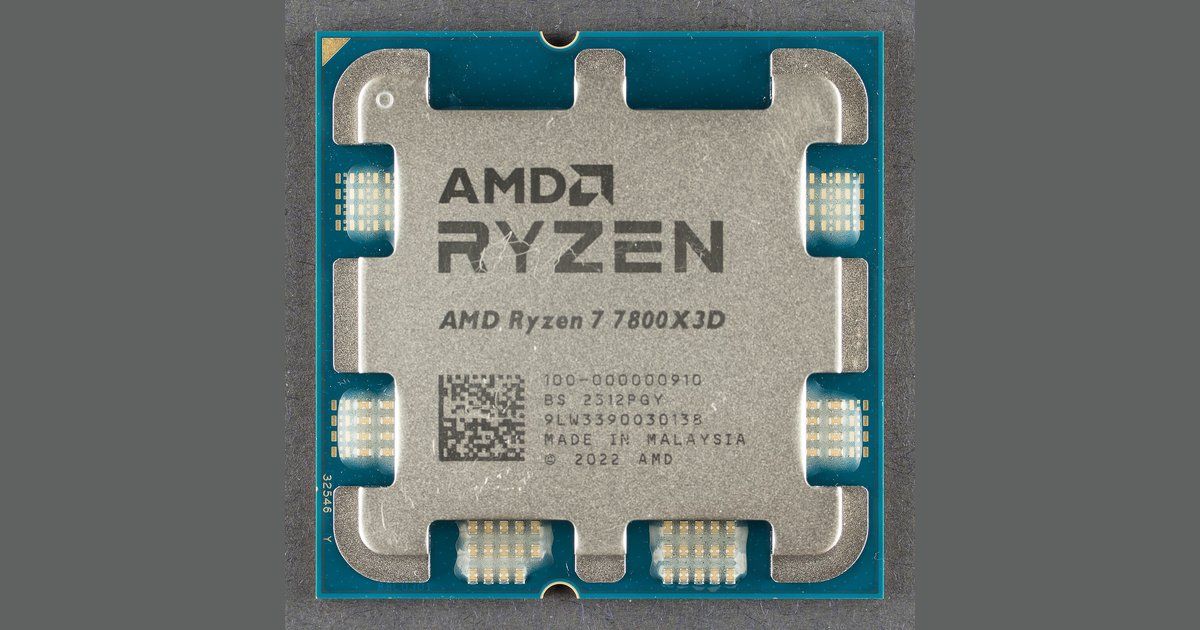
At 1080p at 144 Hz and above, the RX 9070 XT often has enough headroom for the processor to become the ceiling again. That is where 3D V-Cache really helps: the Ryzen 7 7800X3D (8 cores / 16 threads of Zen 4, boost up to 5.0 GHz, 120 W, 96 MB of L3) remains the most balanced choice to feed the card without overpaying.

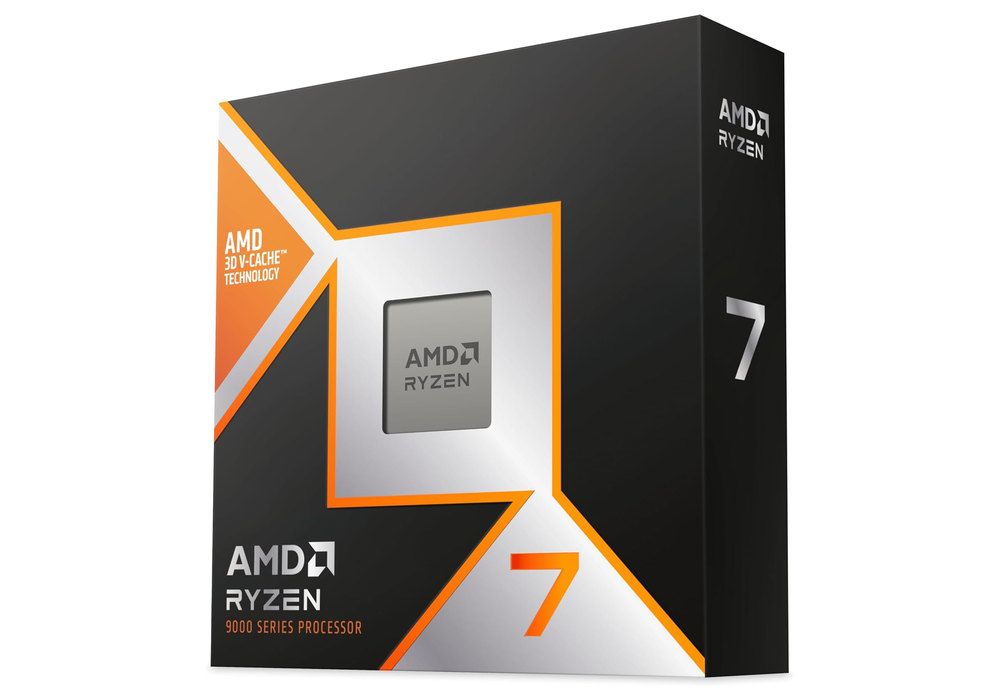
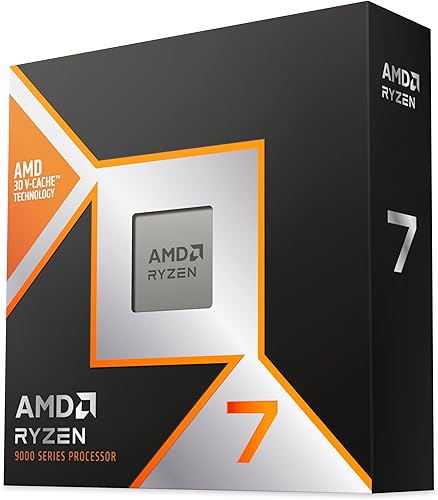
The Ryzen 7 9800X3D (8 cores / 16 threads of Zen 5, boost up to 5.2 GHz, 120 W, 96 MB of L3, cache placed under the cores) is currently the faster of the two in games. TechSpot, across 45 games at 1080p with an RTX 4090, measured it as 8% faster than the 7800X3D on average. The gap grows in some very CPU-heavy titles: around 20 to 23% in Baldur’s Gate 3 depending on the preset, with larger gaps in Starfield, Hogwarts Legacy or The Last of Us Part I. Overall, the typical uplift stays under 10%. Those figures were measured with faster cards than the 9070 XT: with this one, especially at 1440p and 4K, the gap shrinks further once the GPU hits its limit.

Boîte du processeur AMD Ryzen 7 9800X3D avec 3D V-Cache, socket AM5 Click to enlarge

Pick the 9800X3D if you mainly play competitive 1080p, if you want the best 1% lows, or if you plan to reuse this processor with a clearly higher-end card. Otherwise, the 7800X3D already does the job with a 9070 XT.

AMD Ryzen 7 7800X3D

8 cores / 16 threads of Zen 4 on AM5, boost up to 5.0 GHz, 120 W, 96 MB of L3 cache thanks to 3D V-Cache. The most reasonable X3D for a 9070 XT at high-refresh 1080p.

Pros
  • Excellent in games when the CPU is the limiter
  • Better value than the 9800X3D with this card
  • 8 cores, AM5 platform
Cons
  • Less relevant at 4K, where the GPU already limits
  • Weaker in productivity than a 9700X or a 265K
FranceCheck the price in my country
AMD Ryzen 7 9800X3D

8 cores / 16 threads of Zen 5 on AM5, boost up to 5.2 GHz, 120 W, 96 MB of L3. The fastest current X3D, best reserved for high-refresh 1080p or a later GPU upgrade.

Pros
  • The fastest gaming CPU in this guide
  • Better 1% lows in very CPU-heavy titles
  • Keeps its value if you change GPU later
Cons
  • Often a small gap versus the 7800X3D once the 9070 XT is saturated
  • Hard to justify for standard 1440p or 4K
FranceCheck the price in my country

AM5 on a budget: the 7600X, and the 9700X if you also work on the PC

If you are building a new PC and want to spend less on the processor, the Ryzen 5 7600X (6 cores / 12 threads of Zen 4, boost up to 5.3 GHz, 105 W, AM5 socket) remains a serious floor for a 9070 XT at 1440p and 4K, where the card is the limit. The 9600X is more efficient (65 W) and a bit more current, but both are 6-core chips: the gap shows mainly when the CPU is under load, not when the GPU is already maxed out.

Do you also edit, render or stream at the same time? Lean toward a Ryzen 7 9700X (8 cores / 16 threads of Zen 5, boost up to 5.5 GHz, 65 W). In pure gaming, an X3D still leads. In productivity, those 8 cores at 65 W have more headroom than a 9600X, without paying for a 9800X3D.

AMD Ryzen 5 7600X

6 cores / 12 threads of Zen 4 on AM5, boost up to 5.3 GHz, 105 W, 32 MB of L3, integrated iGPU. A credible AM5 floor for an RX 9070 XT at 1440p and 4K.

Pros
  • Keeps an AM5 platform more affordable
  • Enough once the 9070 XT is the limiter
  • iGPU as a fallback
Cons
  • Older architecture than the 9600X
  • 105 W, a step above the 9600X in heat
FranceCheck the price in my country
AMD Ryzen 7 9700X

8 cores / 16 threads of Zen 5 on AM5, boost up to 5.5 GHz, 65 W, 32 MB of L3. The right compromise if you game and work on the same machine, without paying for an X3D.

Pros
  • 8 cores at 65 W, comfortable in productivity
  • Close to a 9600X in games once the GPU is saturated
  • AM5, easy to cool
Cons
  • Slower than an X3D at high-refresh 1080p
  • Cooler not included
FranceCheck the price in my country

On the Intel side: the Core Ultra 7 265K

If you are staying on Intel or starting there, the Core Ultra 7 265K (20 cores in total: 8 P-cores + 12 E-cores, 20 threads, 3.9 GHz P-core base, turbo up to 5.5 GHz, 125 W processor base power, LGA 1851 socket) is the most logical alternative in our catalog. It has no Hyper-Threading on the P-cores. In games, an AMD X3D generally still leads. In multithreaded productivity, Intel’s 20 cores have the edge over a 6- or 8-core Ryzen.

Watch the socket: LGA 1851 and DDR5 required, so a new motherboard if you come from LGA 1700. AM5 remains simpler if you want to change the processor later without starting over.

Intel Core Ultra 7 265K

20 cores (8 P + 12 E) / 20 threads, turbo up to 5.5 GHz, 125 W processor base power, LGA 1851 socket. The Intel alternative if you value productivity as much as gaming.

Pros
  • Much stronger in editing and rendering than a 6-core
  • Fine in games once the 9070 XT is saturated
  • Integrated iGPU
Cons
  • Slower than an X3D at high-refresh 1080p
  • New LGA 1851 platform and DDR5 required
FranceCheck the price in my country

Already on AM4? You do not need to change everything at once

If you already have a Ryzen 7 5700X3D or a 5800X3D on a B550 or X570 board, keep it for a 9070 XT at 1440p: AM4 3D V-Cache is still a very strong partner when the card is the limit. Moving to AM5 (new motherboard and DDR5) is mainly justified if you want very high-refresh 1080p, or a 9600X, 7800X3D or 9800X3D later.

With a Ryzen 5 5600 or a 5600X, Hardware Canucks shows that many AAA games at 1440p max remain limited by the 9070 XT, so the GPU upgrade already pays off. In very CPU-heavy titles, though, these 6 Zen 3 cores start leaving headroom for a newer processor. A 5700X3D on the same motherboard is then the most cost-effective step, before considering AM5.

Should you wait for Zen 6 before choosing your processor?

No, not to build an RX 9070 XT system now. On 10 November 2026, Level1Techs published a first look at server-side Zen 6: the EPYC Venice 9996 (256 cores) and 9686F (96 cores). They report a real-world uplift often above 20% on server workloads, with more cores per chiplet and higher memory bandwidth. These are not desktop Ryzen chips, and those figures do not translate into frames per second in games.

According to Tom’s Hardware, the consumer launch (Olympic Ridge) is expected later, not immediately. Until those desktop chips are on sale, with public gaming tests, waiting for “Zen 6” to buy a 9600X or a 7800X3D has no solid basis. AM5 is still the platform to buy today: you can change the CPU later, without starting over, if AMD does extend the socket.

The card everything is built around

For the partner model, we use the GIGABYTE RX 9070 XT GAMING 16G (2970 MHz core clock, 16 GB GDDR6), the exact catalog model, also verified on today’s product page. Other partners (Nitro+, XFX, OC versions) sit in the same performance band: it is the GPU that matters for the CPU choice, not the cooler color.

GIGABYTE Radeon RX 9070 XT GAMING 16G

RX 9070 XT 16 GB GDDR6, 256-bit bus, PCI Express 5.0, 2970 MHz core clock, model GV-R9070XTGAMING-16GD. The card to build the CPU choice around.

Pros
  • 16 GB, comfortable at 1440p and capable at 4K
  • Catalog model that matches the official SKU
  • Official minimum PSU of 750 W
Cons
  • Long triple-fan card, check your case clearance
  • The CPU matters more if you play high-refresh 1080p
FranceCheck the price in my country

Mistakes to avoid

Overpaying for a 9800X3D for standard 1440p or 4K. With a 9070 XT, the money is better spent on the monitor, the RAM (32 GB of DDR5 is the sensible choice on AM5 today) or a solid PSU, at least the 750 W AMD recommends.

Replacing the whole AM4 platform too soon. A 5700X3D or a 5800X3D still does a very good job at 1440p. AM5 becomes interesting when you want high-refresh 1080p or a newer CPU for several years.

Waiting for a desktop Ryzen Zen 6 that is not here. The first tests from November 2026 cover server EPYC chips. They say nothing reliable about PC gaming today.

Forgetting that FSR changes the picture. As soon as the internal render resolution drops, the processor can become the ceiling again, even at a 1440p output.

FAQ

Does a Ryzen 5 9600X bottleneck an RX 9070 XT?

At 1440p and 4K, very little: the card remains the limiting factor in most games. At 1080p at 144 Hz or above, or in very CPU-heavy games, a 7800X3D or a 9800X3D will go further.

7800X3D or 9800X3D for an RX 9070 XT?

The 7800X3D, unless you mainly play high-refresh 1080p or want to keep the CPU for a higher-end card later. TechSpot measured, on average, only an 8% lead for the 9800X3D at 1080p with an RTX 4090, and the typical gap stays under 10%. With a 9070 XT, it shrinks further once the GPU is the limit.

Should you wait for Zen 6?

Not for a purchase now. Level1Techs’ first look on 10 November 2026 covers server EPYC chips, not desktop Ryzen. Until those consumer parts have public gaming tests, a 9600X or a 7800X3D on AM5 remains a reasonable choice.

Is a Ryzen 5 5600 or 5600X enough on AM4?

Often yes in 1440p AAA, when the 9070 XT is already the limiter, according to Hardware Canucks’ scaling. In very CPU-heavy games, these 6 Zen 3 cores leave more headroom on the table. A 5700X3D on the same motherboard is the simplest upgrade before AM5.

AMD or Intel with an RX 9070 XT?

In pure gaming, AMD with an X3D still leads. If you do a lot of productivity work, the Core Ultra 7 265K and its 20 cores have more headroom than a 6- or 8-core Ryzen. AM5 remains more comfortable for future upgrades.

Which PSU for an RX 9070 XT?

AMD recommends a minimum of 750 W, for a card whose typical board power is given as 304 W. Leave some headroom if you add a 120 W CPU, several drives and a lot of RGB, but there is no reason to invent a higher threshold without measurements.

Conclusion

For an RX 9070 XT in 2026, do not overpay for the processor by default. At 1440p and 4K, a Ryzen 5 9600X (or a 7600X if you need to keep the budget tighter) is enough. For competitive 1080p or very CPU-heavy games, the Ryzen 7 7800X3D is the right pick, and the 9800X3D only makes sense if you want the maximum or plan to keep this CPU longer. On AM4, start by getting the most out of a 5700X3D or 5800X3D before changing everything. And do not wait for a desktop Zen 6 for which, so far, we only have server tests.