yuux
Co-founder of DropReference, I'm here to give you the best tips to build the gaming PC of your dreams!
yuux
Co-founder of DropReference, I'm here to give you the best tips to build the gaming PC of your dreams!
Some RTX 5060s feature a GB205 die instead of the planned GB206. We explain why Nvidia recycles its RTX 5070 chips, what this means in practice, and whether you should be concerned about it.
The Korean site Quasar Zone just dropped a bomb that is causing a stir in the small world of hardware. By disassembling a ASUS DUAL GeForce RTX 5060 OC D7 8 GB , the testers came across a die GB205-200-KB-A1 instead of the GB206 normally used on the RTX 5060. And this, is the die of the RTX 5070. Not the 5060.
Concretely, your RTX 5060 potentially carries the same silicon as the card sold 200 euros more expensive. So yes, said like that, it sounds like a good deal. But it's a bit more subtle than that — and Nvidia doesn't do this out of generosity.
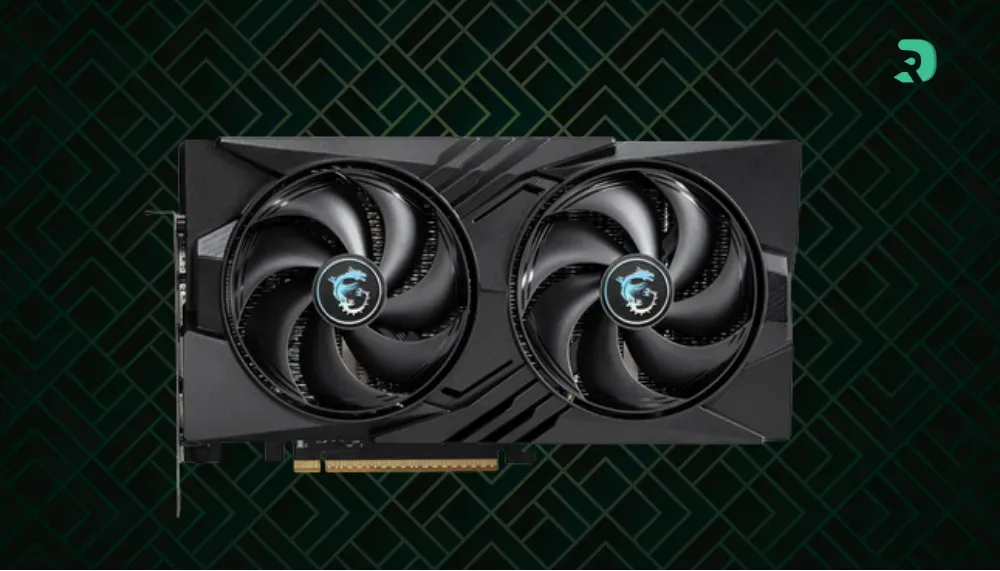
The thing is, Quasar Zone is not the only one to have noticed. Last July, MSI discreetly added four "V1" branded RTX 5060 references to its catalog, all based on the GB205. Yeston, Maxsun, and now ASUS: that's starting to be a lot for a simple coincidence. So we dug into the subject to understand what is really happening at Nvidia.
To understand the mess, we need to go back to the basics. In Nvidia's Blackwell architecture, each range of GPU relies on a specific die — a physical chip. The RTX 5060, normally, it's the GB206 . A compact die, designed for the mid-range. The RTX 5070, it runs on the GB205 , bigger, more transistors, more SM (Streaming Multiprocessors).
The numbers speak for themselves. The GB205 weighs 263 mm² for 31.1 billion transistors and carries 48 SM at most (6 144 CUDA cores in full config). The GB206, it is 181 mm² for 21.9 billion transistors and 36 SM max (4,608 CUDA cores). In short, the GB205 is 45% physically larger.
But — and this is where it gets interesting — when Nvidia puts a GB205 in an RTX 5060, it does not leave all its SMs active. The card is configured exactly like a standard RTX 5060: 3 840 CUDA cores, 120 TMU, 48 ROP, 8 GB of GDDR7 on a 128-bit bus . Nvidia disables the excess units. On paper, it's the same card. Under the hood, the piece of silicon is just bigger.
 Click to enlarge
A visual detail allows them to be differentiated without even opening the card: the mounting of the GPU on the PCB. The RTX 5060 based on GB206 uses a mounting square (the compact), while those with a GB205 display a mounting rectangular , identical to that of the RTX 5070. That's how the first reports were made.
| Characteristic | GB206 (RTX 5060 standard) | GB205 (RTX 5060 V1 / cut-down) |
|---|---|---|
| Die size | 181 mm² | 263 mm² |
| Transistors | 21.9 billion | 31.1 billion |
| Max SM (complete die) | 36 | 48 |
| Active SM (RTX 5060) | 30 | 30 |
| Active CUDA cores | 3 840 | 3 840 |
| TMU | 120 | 120 |
| ROP | 48 | 48 |
| VRAM | 8 GB GDDR7 | 8 GB GDDR7 |
| Memory bus | 128 bits | 128 bits |
| Bandwidth | 448 GB/s | 448 GB/s |
| TDP | 150 W | 150 W |
| Process | TSMC 4NP | TSMC 4NP |
| GPU assembly | Square | Rectangulaire |
And there, you might be wondering: a chip from RTX 5070 in an RTX 5060, that must pack a punch, right? Spoiler: no.
The tests conducted by Quasar Zone on the ASUS DUAL RTX 5060 OC (the one with the GB205) show almost identical performances to a classic RTX 5060 based on GB206. Some results are very slightly above, but TweakTown and other media attribute this gap to factory overclock of this ASUS model in particular, not to the die itself.
It makes sense when you think about it. Nvidia throttles the GB205 exactly to the same specs as the GB206 in the RTX 5060: same number of active CUDA cores, same memory bus, same TDP. The die may be physically larger — 263 mm² versus 181 mm² — the additional compute units are disabled. The GPU does not "know" that it is larger. It does exactly what it is asked, no more, no less.
On the consumption and temperature side, the same observation. No significant difference reported. The TDP remains at 150 W, the thermal behavior is similar. Some hoped for a more generous overclocking thanks to the larger die margin — we will come back to that later — but in standard use, you will not see any difference in game .
This practice has a name: the die harvesting (or binning, depending on the context). And Nvidia did not invent it — it has been done for decades in the semiconductor industry.
The principle is simple. When TSMC manufactures GB205 wafers for Nvidia, not all the dies produced are perfect. Some have defects on a few SMs, others do not meet the required frequencies for an RTX 5070. Rather than throwing them in the trash — which would be a monumental waste given the production cost in 4NP — Nvidia disables the defective blocks and downgrades the chip. A GB205 that cannot be a 5070? It becomes an RTX 5060.
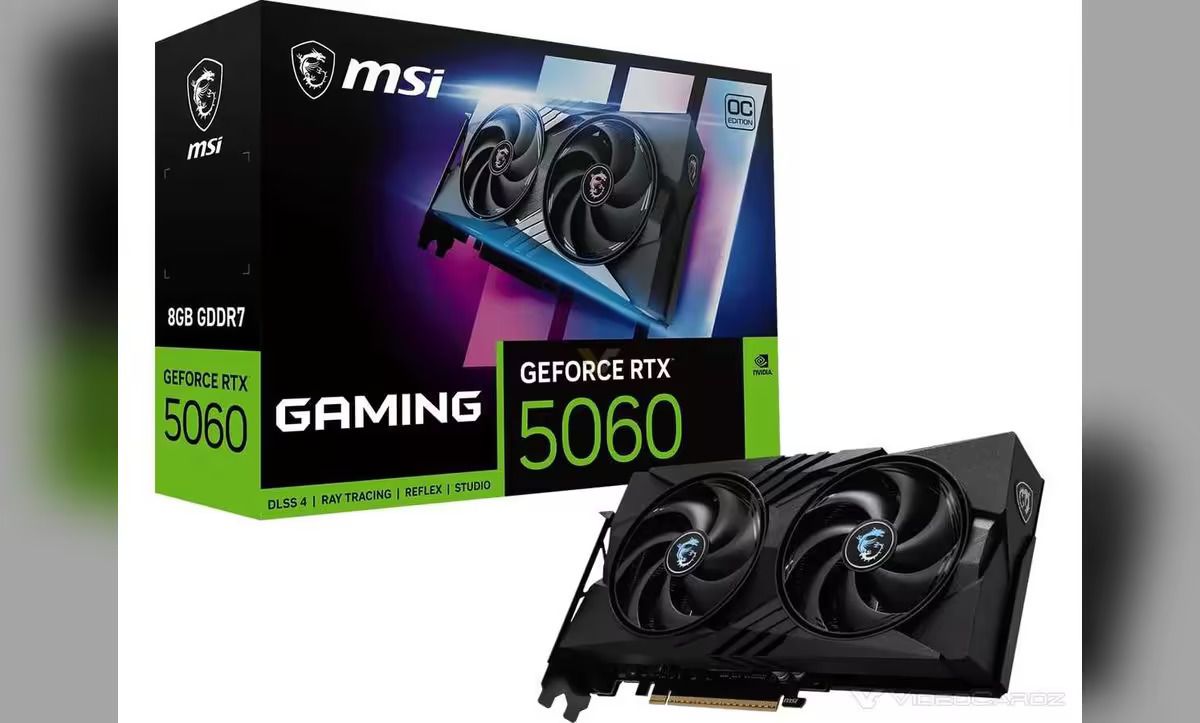 Click to enlarge
Nvidia has already done this in the past, by the way. The most famous case is the GTX 780 which used the same die GK110 as the Titan, but with disabled units. More recently, some RTX 4070s featured the AD103 die from the RTX 4070 Ti instead of the planned AD104. It's cyclical: when Nvidia has too much stock of a large die, or when the yields of the small one do not keep up, the green redirects its production.
There is also an economic explanation. The GB206 is relatively new in the production chain. If Nvidia has surplus stocks of GB205 — because the demand for RTX 5070 is met, or because the yields are good and generate a lot of dies "not good enough for the 5070" — it makes sense to sell them in RTX 5060 rather than waste them. For TSMC and Nvidia, it is pure industrial common sense.
Let's not kid ourselves: it's a bit unclear. Nvidia does not officially communicate which die is in which card, and the manufacturers are not very talkative either. But here is what we know as of the end of August 2026.
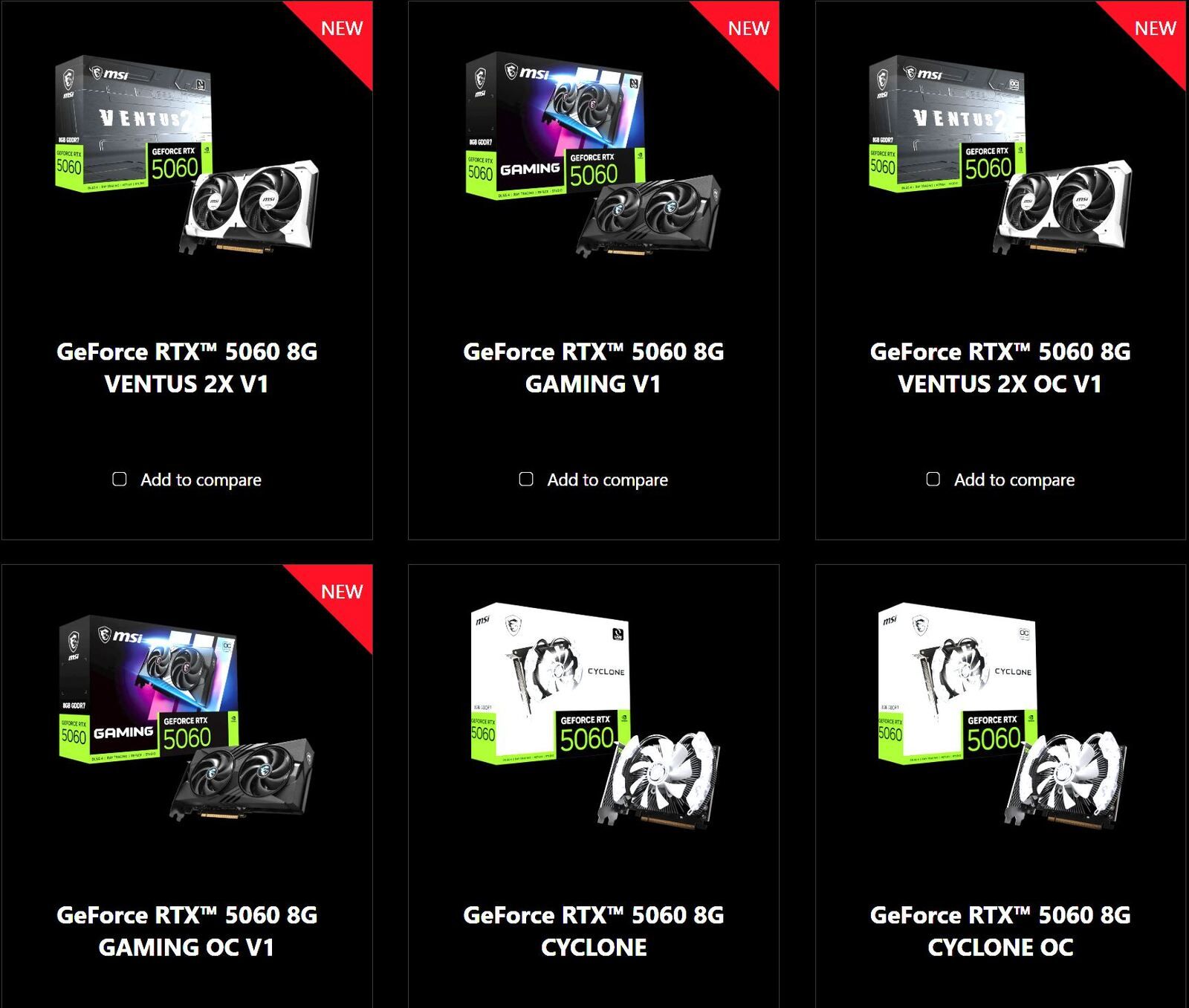 Click to enlarge
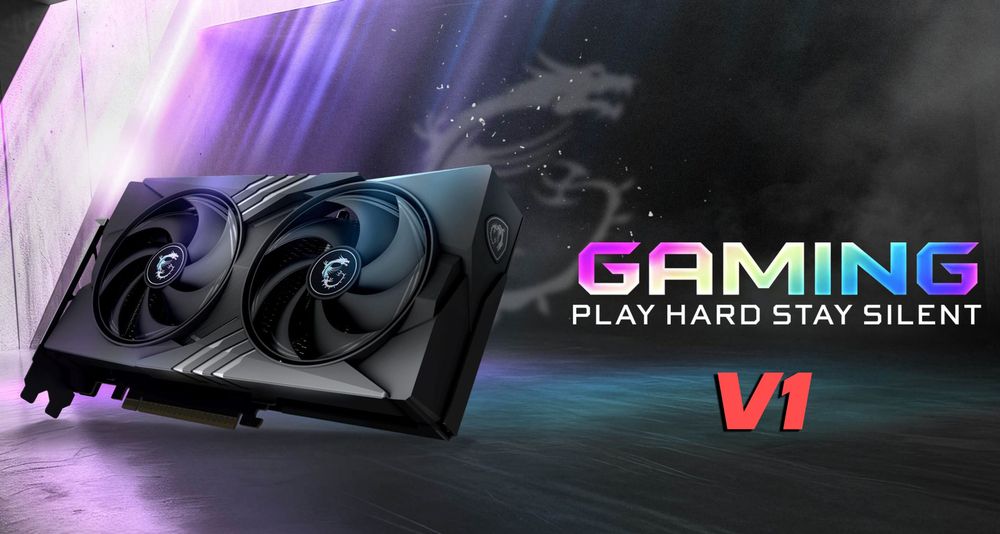
MSI is the most transparent manufacturer — or the least discreet, it depends. In July 2026, four new RTX 5060 references appeared on its site, all marked "V1": the Gaming V1, Gaming V1 OC, Ventus V1, and Ventus V1 OC. The suffix V1 indicates the transition to the GB205 die. If you see "V1" on an MSI RTX 5060, it's from GB205. MSI has also started using the 16 pin connector on some of these models, where the GB206 versions were satisfied with the classic 8 pins.
ASUS has not announced anything officially. It is the disassembly of Quasar Zone that revealed that the ASUS DUAL RTX 5060 OC D7 included a GB205. Impossible to know in advance if your specific model is GB205 or GB206 — the box and the displayed specs are identical.
Yeston and Maxsun (chinese brands) have also launched RTX 5060 with die GB205, some with a 16 pin connector. On the side of Gigabyte and other major AIBs, no confirmed info for now. But given the trend, it would not be surprising if others follow.
Well, let's be honest. In terms of raw performance in gaming: nothing . Whether your RTX 5060 is GB205 or GB206, the benchmarks are the same, the consumption is the same, the temperatures are comparable. You won't notice it. Nvidia ensures that the specs of the card — CUDA cores, VRAM, bus, TDP — are strictly identical.
Where it could have a micro-impact is on overclocking . In theory, a larger die with more disabled transistors could offer a small additional thermal or voltage margin. But in practice, these GB205 dies are in the RTX 5060 precisely because they have not passed the criteria of the RTX 5070. So the OC margin is probably limited, even lower than that of a good GB206.
For the used market and resale , it's a non-event. No one is going to pay more for an RTX 5060 because it has a GB205 inside — the performance is identical. And on the warranty side, it's transparent: the card is sold as RTX 5060, it is guaranteed as RTX 5060, period.
The only thing that can legitimately annoy is the lack of transparency . You buy a RTX 5060, you don't know which die is inside. It's not a lottery in terms of performance — both are the same — but it's a bit like the principle of "you don't know exactly what you're buying". And that, in a market where a card costs 350-400 euros, is somewhat acceptable.
The most reliable way is GPU-Z . Launch it and check the "GPU" line: if you see GB205-200-KB-A1, it's a GB205. If it's GB206-xxx, it's the standard die. Visually, you can also look at the GPU mounting through the backplate if your card has one: square mount = GB206, rectangular = GB205. But frankly, it doesn't change anything in practice.
No. The TDP remains set at 150 W whatever chip is used. Nvidia configures the GB205 to exactly match the same power budget as the GB206 in this application.
No. The units are disabled at the hardware level by Nvidia via laser fuses (eFuses). This is not a software limitation that you could bypass with a modified BIOS. The disabled SMs are permanently disabled.
Not officially confirmed for other models in the desktop range, but the RTX 5060 Ti could also be affected in the long run if the same die harvesting logic applies. We will monitor the disassemblies.
No. Frankly, unless you are a die collector or an extreme overclocker, it makes no difference in daily use. Choose your RTX 5060 based on its usual criteria: cooling, noise, price, and manufacturer's warranty.
This story of GB205 in the RTX 5060 is fascinating from a technical point of view, but practically harmless for the player. Nvidia does what all semiconductor manufacturers do: optimize its yields, avoid waste, and maximize its margins. We can criticize them for the lack of transparency — and we do — but the performances are identical, the warranty too, and the price does not change.
If you are in the process of choosing an RTX 5060, don't stress about it. Look at the price, the cooler, the number of slots, and the noise level. The die that runs behind, that's Nvidia's business, not yours. And if by chance you come across a GB205 model while running GPU-Z, well... now you know what that means.